Showing posts with label Extradition. Show all posts

Friday, June 15, 2012

Italy seeks extradition of Australian "Mafia" trio

Three Mafia figures living freely in Australia and labelled ''extremely dangerous'' by Italian authorities have been sentenced in absentia to long jail terms for international drug trafficking.

Fairfax can reveal that Australian men Nicola Ciconte, Vincenzo Medici and Michael Calleja have been convicted and sentenced in absentia in Italy for their role in a plot to smuggle up to 500 kilograms of cocaine into Australia.

Australian and Italian police have received intelligence that the cocaine - which has never been recovered - was meant to be smuggled off the port of Melbourne by corrupt workers and taken via truck to a container yard in Sydney, where some of it was to be hidden in a second truck and driven to Adelaide.

Ciconte, 56, formerly of Victoria but now living on the Gold Coast, was sentenced to 25 years jail last month by a Calabrian court for his role in the conspiracy.

The court heard that Ciconte had, along with a small group of Calabrian Mafia bosses, worked as ''promoters, directors, organisers and financiers'' of a plan to import cocaine provided by the Colombian cartels to Australia between 2002 and 2004.

Medici, 47, of Mildura, and Calleja, 53, of Melbourne, were found to have assisted Ciconte in the plot and were each sentenced to 15 years in jail.

Assistant prosecutor Maria Vittoria De Simone told Fairfax that Italy would be pushing the Australian government to extradite the convicted men.

''We will be strongly pursuing the extradition,''

''These individuals have been convicted of heavy sentences in a huge trial and they are extremely dangerous.''

The revelations of the trio's convictions and sentences highlights a common but mostly untold story of global organised crime investigations, in which suspects often escape justice due to jurisdictional hurdles.

During the Italian police inquiry into Ciconte, Medici and Calleja, the Australian Federal Police launched its own drug trafficking inquiry into the trio.

But key evidence from Italian police, including the testimony of an informer, could not be used in Australian courts and the Commonwealth Director of Public Prosecutions advised the AFP against charging the men.

Before the Australian trio were convicted and sentenced in absentia last month, Italian prosecutors had alleged in court that the men had conducted a trial drug run using an empty shipping container before the actual drug run.

The prosecutors alleged that Ciconte ''maintained contact with associates in Vibo Valentia, supplying the materials for the trial containers in collaboration with Medici, Calleja … who made several trips from Australia to Calabria to determine the details of the shipments and the payments''.

''The ultimate goal for Ciconte, Medici, Calleja … [was] to supply the imported cocaine in the Australian market''.

Ciconte's key contact in Italy was Calabrian mafia boss, Vincenzo Barbieri, who is serving an 18-year sentence for his role in the plot.

Between 2002 and 2004, Italian authorities tapped phone calls between Barbieri in Calabria and Ciconte in Victoria and filmed meetings in Italy between Ciconte and his Australian associates and Barbieri and other Mafia figures.

The trio's sentencing in Italy also highlights the ongoing presence in Australia of the Calabrian mafia, known as the 'Ndrangheta, or Honoured Society, which established deep roots in NSW, Victoria and South Australia through migration during the last century.

Ms De Simone told Fairfax: ''We urge the Australian authorities to remember that 'Ndrangheta … represents an enormous risk for countries far from Italy.

''The 'Ndrangheta is the organisation that runs the international cocaine market. It doesn't do its business in Calabria but around the world. It has infiltrated all economic sectors and it controls voting and political candidates at a national and international level. I urge the Australians not to underestimate this organisation. Otherwise it will be too late.''

Ms De Simone said a request to extradite the trio would be made by Italy's Ministry of Justice to the Australian Attorney-General Nicola Roxon.

When asked about the case, the Attorney-General's department told Fairfax it does not comment on extradition matters.

In a separate case also targeting Australian crime figures with links to the Calabrian mafia, NSW drug trafficker Pasquale Barbaro was last month sentenced to life in prison for his role in organising an importation from Italy.

Sunday, June 10, 2012

Mastro mystery: Aging ex-magnate nears 1 year on the lam

Michael R. Mastro celebrated his 87th birthday Friday.

The big question, of course, is — where?

It's been nearly a year since the onetime Seattle real-estate magnate and his wife, Linda, moved out of the $2 million house they had been renting in Palm Desert, Calif., and headed for parts unknown.

The couple left June 23, days after the judge in Mastro's massive bankruptcy case ordered them to turn over two giant diamond rings valued at $1.4 million. They officially became fugitives a month later when warrants were signed for their arrest.

But they remain at large, and there are just two plausible explanations:

Either federal authorities don't know where the Mastros are — or they do know, but haven't moved to apprehend the couple yet because legal complications stand in the way.

Denny Behrend, a retired deputy U.S. marshal, suspects it's the latter. His former colleagues in the Marshals Service are very good at finding people who don't want to be found, he says, but extracting fugitives from other countries can be legally tricky.

"I'd bet they're just putting all their ducks in line so that when they do move in, it'll go smoothly," says Behrend, now vice president of Lacey OMalley Bail Bonds in Seattle.

Mark Ericks, U.S. marshal for Western Washington, won't say if Behrend is right. The U.S. Attorney's Office in Seattle won't say anything about the Mastros.

But all this silence hasn't halted rampant speculation about the couple's whereabouts.

"I was at a charity event recently and I had people come up to me and swear they'd seen Mike and Linda in South America, or Europe, or Canada, or Sun Valley," says James Frush, Mastro's lawyer. "It was ridiculous."

Frush won't say whether he's been in contact with his client-on-the-lam. When he's asked if he knows where the Mastros are, he jokes about one of their favorite restaurants.

"I tell people they're in the wine cellar at Canlis," Frush says.

Michael Mastro was a longtime and prolific real-estate developer and lender whose website alluded to his "billion-dollar career." But his highly leveraged empire fell apart when the market tanked.

Three lenders pushed Mastro into bankruptcy in 2009. The most recent estimate of his debt to unsecured creditors is $250 million, and court-appointed trustee James Rigby has said those creditors will be lucky to get back more than a few pennies on the dollar.

In the Mastros' absence, the $5,000-a-day fine that Bankruptcy Judge Marc Barreca imposed to persuade them to turn over the rings has continued to accrue. It now totals more than $1.5 million.

Ericks, the U.S. marshal, revealed last September that his agency had tracked the Mastros to an apartment in Canada in August — only to find they had left a day or two before.

If they are in another country, marshals can't bring them back without that nation's cooperation. And some countries are more cooperative than others.

About 70 — from Russia and China to Afghanistan and Somalia — don't even have extradition treaties with the U.S. But Douglas McNabb, a Washington, D.C., criminal-defense attorney who specializes in international extradition, says those nations hold little appeal for most fugitives.

"Any country that you could go to without an extradition treaty — they wouldn't want to live there," he says.

Extradition can be challenging even in countries with treaties, however.

For one, there's no indication the Mastros have been charged with a crime. Barreca issued the arrest warrants for them last July for contempt of court, a civil violation.

Extraditing someone on that basis is difficult, if not impossible, experts agree.

"They're not going to get to extradite him on a civil matter," says Jacques Semmelman, a New York lawyer and international extradition expert. "There has to be a crime."

John Strait, who teaches criminal law at Seattle University, agrees. "There might be some ways you could do it," he says, "but it wouldn't be easy, and it would take a lot of time."

Mastro is the subject of a federal criminal investigation. While the U.S. Attorney's Office in Seattle won't confirm it, Frush acknowledged the probe more than two years ago. It's still under way, lawyers for a Mastro associate who also is under investigation said last month in court documents.

If federal marshals know where the Mastros are, they could be waiting for a grand-jury indictment before they move to apprehend the couple. That would make extradition much easier, experts agree.

But they also say it's possible a sealed indictment already has been issued that hasn't been made public for fear of pushing the Mastros further underground. There could be new arrest warrants — also sealed — based on that indictment, they add.

McNabb suspects that's what has happened. The Marshals Service probably wouldn't have been pursuing the Mastros in Canada last year with warrants based only on a contempt citation, he says.

If Mastro has been — or will be — indicted, the government's success in extraditing him could hinge on exactly what the charges against him are.

One likely possibility is bankruptcy fraud — hiding assets from creditors. Rigby filed a civil suit accusing Mastro of that, and Barreca ruled in the trustee's favor last fall.

Experts differ on how easy it would be to extradite Mastro to be tried for that offense.

Some extradition treaties list specific crimes for which other countries will turn over a fugitive American to U.S. authorities. Other treaties are more general, authorizing extradition if the offense with which the American is charged also is a crime in that country.

Bankruptcy fraud is recognized as a crime almost universally, says Strait — if not by that name, then as a form of "theft by deception." Semmelman agrees.

But McNabb says it's not always that clear-cut.

One example: While Brazil's treaty with the U.S. authorizes extradition for "crimes or offenses against the bankruptcy laws," that country's Supreme Court declined in 1999 to extradite an American charged with bankruptcy fraud.

If foreign authorities balk at extraditing Mastro for that offense, McNabb says, the hurdle might be overcome by also charging him with other, possibly related crimes: perjury, mail fraud or wire fraud, for instance.

Tax fraud is another possibility. Internal Revenue Service agents, as well as FBI agents, interviewed Mastro associates last summer, Frush says. One Mastro associate, Bellevue developer Winstron Bontrager, was indicted in March for tax fraud, including concealing income from a real-estate deal in which Mastro was involved.

But the people who know what charges Mastro may — or does — face aren't talking.

"You're trying to read the tea leaves," says Frush, "but the tea is just too murky."

There are a few shards of new information about the search for the Mastros that only raise more questions:

• In January, the Mastros' Bentley, Chihuly glass pieces and other household goods were auctioned off in Palm Desert. Auctioneer Tim Murphy observed a large number of hits on the auction website from Italy, and he speculated the Mastros might be staying there.

Murphy said recently that he allowed the FBI to burrow into his firm's computers to try to learn more, but he understands they hit a dead end. The FBI also asked for a list of people registered for the auction, he said.

• Last November, after Barreca ruled that Linda Mastro, now 62, owed her husband's creditors more than $1.3 million, her lawyer, Michael Gossler, filed an appeal on her behalf.

Did she authorize it? Gossler won't discuss whether he's been in contact with his client. Frush says Gossler could be acting in what he considers Linda Mastro's interests without communicating with her.

The last person who publicly acknowledged speaking with the Mastros was Gloria Plischke, Michael's sister. She said last September that he had phoned her several times. (Plischke couldn't be reached for comment for this story.)

Behrend, the retired marshal, says the Mastros almost certainly aren't communicating with family or friends now. They're probably living under assumed names, he says, and paying for everything with cash.

But "the Mastros are really not fugitive-type people," he says. "And being a fugitive is really hard work."

Authorities could be negotiating with the country where the couple are staying to extradite or deport them, Behrend says. Or marshals could be trying to lure the Mastros to a country where extradition might be easier.

Few fugitives remain at large this long, says Frush, a former federal prosecutor: They can't withstand the tug of home, family and friends.

"But once those ties are cut, at a certain point your life changes so much that you escape that pull," he says.

Ericks, the U.S. marshal, won't respond to all this speculation. "There's just things I can't talk about," he says.

"Just know that if we have the authority to get him, we're going to get him."

Tuesday, June 5, 2012

China seeks runaway factory bosses, wants to sign more extradition treaties

China is seeking the extradition of private entrepreneurs who have fled abroad after defaulting on billions of yuan owed to state banks and loan sharks, two independent sources said, a rare move underlining Beijing’s concern over the scale of losses.

Airports and other border crossings have received lists containing the names of heavily indebted small and medium enterprise (SME) bosses who are not permitted to leave the country, said the sources, who have direct knowledge of the situation and requested anonymity because of political sensitivities.

“Foreign governments have been asked to repatriate [fugitive] SME bosses and help recover their overseas assets,” said the first source with knowledge of the negotiations.

Many of the managers are suspected to have fled to countries such as the US, Canada, Australia and Singapore, according to Chinese media reports.

The problems began with private companies in the eastern city of Wenzhou — famous for its entrepreneurs and speculators — turning to the underground lending market after Beijing clamped down on credit as part of a campaign against inflation.

Squeezed by falling export orders and rising raw material, land and labor costs — and in some cases suffering losses on their own property investments — many found themselves unable to repay, leading some SME bosses to abandon their debts, factories and workers.

The troubles are now spreading to other areas, including several cities in Zhejiang Province and Erdos in the northern region of Inner Mongolia, according to local media.

“SME bosses who owe banks a lot of money are under ‘border control,’” the second source said, referring to government monitoring and curbs on their overseas travel.

Heads of at least 80 companies in Wenzhou have gone into hiding because they could not repay loan sharks, leaving behind debts, unpaid wages and thousands out of a job, according to the online edition of Xinhua news agency.

The Foreign and Public Security ministries declined immediate comment when reached by telephone.

Beijing is also seeking to sign extradition treaties with more countries in its effort to bring home runaway officials and recover their overseas assets, the sources said.

China has such treaties with at least 33 countries since 1993, according to the Ministry of Foreign Affairs Web site.

China and the US have no extradition treaty, although the countries have cooperated on corruption cases before, including in 2004, when a former Bank of China manager was deported to face charges at home.

More than 10,000 Chinese Communist Party and government officials fled to the US or Europe with 650 billion yuan (US$102 billion) in bribes or embezzled state funds between 1999 and 2009, according to a Peking University study.

Russia proposes bilateral extradition treaty with US

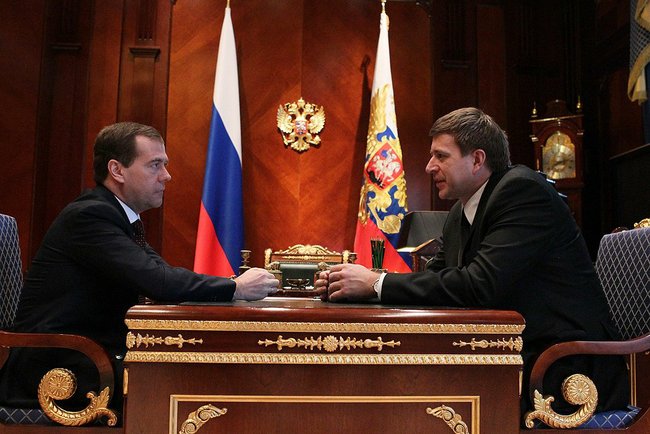
Russia proposes that the United States sign a bilateral extradition treaty or join existing international conventions, Russian Justice Minister Alexander Konovalov said on Friday.

"The Justice Ministry proposes either signing bilateral treaties on the extradition of criminals and repatriation of convicts. The second variant for the U.S. is to join the existing convention mechanisms, we will try to persuade our U.S. partners to do this too,” Konovalov told journalists during his working visit to Washington.

"We raised these issues more than two years ago, during the first visit of a justice ministry’s delegation to the U.S. So far, frankly speaking, the U.S. side remains reluctant to accept our proposals,” the minister said. “But, on the whole, we hope to persuade them and we aim to do our best.”

Russia and the U.S. have no extradition deal and Russian citizens convicted by U.S. court serve their sentences in the United States.

Relations between the two countries have been strained by legal proceedings against Russian nationals in the U.S., including the trial of Viktor Bout, a Russian national arrested in Thailand in March 2008 in an operation led by U.S. agents and extradited in November 2010, and the case of Vladimir Zdorovenin, a Russian cybercrimes suspect extradited in mid-January from Switzerland to the U.S. without Russia receiving timely notification.

"Such practices are absolutely unacceptable to us. We, of course, think that it is understandable… But people should not be abducted on the territory of third states, they should not be extradited illegally. Legal instruments and mechanisms should be used, and we are going to further discuss the issue with the Americans,” Konovalov said.

His statement overlooked a growing body of opinion that regards extradition as a crime in its own right, albeit one committed by the state against its citizens.