Showing posts with label Legal. Show all posts

Wednesday, June 13, 2012

Call to criminalise Australians who support Fiji regime

There has been a call for Australia and New Zealand to make it illegal for its citizens to work overseas in support of undemocratic regimes.

The call comes from prominent Fiji academic, Professor Wadan Narsey, who says several Australians and and New Zealanders are working in prominent positions in the coup installed military government in Fiji.

Professor Narsey told Radio Australia's Pacific Beat program that both countries already criminalise their citizens who travel offshore to engage in paedophilia or terrorist activities, and supporting what he says are illegal governments should be treated the same way.

"I mean I have no problems with those people who are trying to do positive and constructive things, you know, to try and get the country back to a lawful and democratic government," he said.

"But where I have a problem is where quite a few people have gone there and justified illegal things such as the overthrow of a lawful government, or they have taken part in processes which have compromised the judiciary or have compromised the ministerial portfolios."

"If somebody goes and engages in paedophilia or engages in activities which encourage terrorism, such as what happened in September 11, you have laws over here which allows the Australian and New Zealand Governments to prosecute them," said Professor Narsey.

"There is no laws which they can use to discredit this unlawful behaviour abroad, and to me this strikes me as double standards."

He says the lack of legislation available to prosecute such actions is a double standard, made more glaring by the fact that Australia has imposed travel bans on not only those taking part in the coup in Fiji, but their relatives as well.

"That infringes on their basic human rights," he said.

"I mean you are not responsible for your relatives, you are responsible for your own actions."

Professor Narsey says that with huge financial interests at play in areas like PNG and East Timor, there is the very real danger that the assistance of well-trained New Zealanders and Australians can be used to further weaken the fragile political and judicial institutions in these places.

Sunday, June 10, 2012

Mastro mystery: Aging ex-magnate nears 1 year on the lam

Michael R. Mastro celebrated his 87th birthday Friday.

The big question, of course, is — where?

It's been nearly a year since the onetime Seattle real-estate magnate and his wife, Linda, moved out of the $2 million house they had been renting in Palm Desert, Calif., and headed for parts unknown.

The couple left June 23, days after the judge in Mastro's massive bankruptcy case ordered them to turn over two giant diamond rings valued at $1.4 million. They officially became fugitives a month later when warrants were signed for their arrest.

But they remain at large, and there are just two plausible explanations:

Either federal authorities don't know where the Mastros are — or they do know, but haven't moved to apprehend the couple yet because legal complications stand in the way.

Denny Behrend, a retired deputy U.S. marshal, suspects it's the latter. His former colleagues in the Marshals Service are very good at finding people who don't want to be found, he says, but extracting fugitives from other countries can be legally tricky.

"I'd bet they're just putting all their ducks in line so that when they do move in, it'll go smoothly," says Behrend, now vice president of Lacey OMalley Bail Bonds in Seattle.

Mark Ericks, U.S. marshal for Western Washington, won't say if Behrend is right. The U.S. Attorney's Office in Seattle won't say anything about the Mastros.

But all this silence hasn't halted rampant speculation about the couple's whereabouts.

"I was at a charity event recently and I had people come up to me and swear they'd seen Mike and Linda in South America, or Europe, or Canada, or Sun Valley," says James Frush, Mastro's lawyer. "It was ridiculous."

Frush won't say whether he's been in contact with his client-on-the-lam. When he's asked if he knows where the Mastros are, he jokes about one of their favorite restaurants.

"I tell people they're in the wine cellar at Canlis," Frush says.

Michael Mastro was a longtime and prolific real-estate developer and lender whose website alluded to his "billion-dollar career." But his highly leveraged empire fell apart when the market tanked.

Three lenders pushed Mastro into bankruptcy in 2009. The most recent estimate of his debt to unsecured creditors is $250 million, and court-appointed trustee James Rigby has said those creditors will be lucky to get back more than a few pennies on the dollar.

In the Mastros' absence, the $5,000-a-day fine that Bankruptcy Judge Marc Barreca imposed to persuade them to turn over the rings has continued to accrue. It now totals more than $1.5 million.

Ericks, the U.S. marshal, revealed last September that his agency had tracked the Mastros to an apartment in Canada in August — only to find they had left a day or two before.

If they are in another country, marshals can't bring them back without that nation's cooperation. And some countries are more cooperative than others.

About 70 — from Russia and China to Afghanistan and Somalia — don't even have extradition treaties with the U.S. But Douglas McNabb, a Washington, D.C., criminal-defense attorney who specializes in international extradition, says those nations hold little appeal for most fugitives.

"Any country that you could go to without an extradition treaty — they wouldn't want to live there," he says.

Extradition can be challenging even in countries with treaties, however.

For one, there's no indication the Mastros have been charged with a crime. Barreca issued the arrest warrants for them last July for contempt of court, a civil violation.

Extraditing someone on that basis is difficult, if not impossible, experts agree.

"They're not going to get to extradite him on a civil matter," says Jacques Semmelman, a New York lawyer and international extradition expert. "There has to be a crime."

John Strait, who teaches criminal law at Seattle University, agrees. "There might be some ways you could do it," he says, "but it wouldn't be easy, and it would take a lot of time."

Mastro is the subject of a federal criminal investigation. While the U.S. Attorney's Office in Seattle won't confirm it, Frush acknowledged the probe more than two years ago. It's still under way, lawyers for a Mastro associate who also is under investigation said last month in court documents.

If federal marshals know where the Mastros are, they could be waiting for a grand-jury indictment before they move to apprehend the couple. That would make extradition much easier, experts agree.

But they also say it's possible a sealed indictment already has been issued that hasn't been made public for fear of pushing the Mastros further underground. There could be new arrest warrants — also sealed — based on that indictment, they add.

McNabb suspects that's what has happened. The Marshals Service probably wouldn't have been pursuing the Mastros in Canada last year with warrants based only on a contempt citation, he says.

If Mastro has been — or will be — indicted, the government's success in extraditing him could hinge on exactly what the charges against him are.

One likely possibility is bankruptcy fraud — hiding assets from creditors. Rigby filed a civil suit accusing Mastro of that, and Barreca ruled in the trustee's favor last fall.

Experts differ on how easy it would be to extradite Mastro to be tried for that offense.

Some extradition treaties list specific crimes for which other countries will turn over a fugitive American to U.S. authorities. Other treaties are more general, authorizing extradition if the offense with which the American is charged also is a crime in that country.

Bankruptcy fraud is recognized as a crime almost universally, says Strait — if not by that name, then as a form of "theft by deception." Semmelman agrees.

But McNabb says it's not always that clear-cut.

One example: While Brazil's treaty with the U.S. authorizes extradition for "crimes or offenses against the bankruptcy laws," that country's Supreme Court declined in 1999 to extradite an American charged with bankruptcy fraud.

If foreign authorities balk at extraditing Mastro for that offense, McNabb says, the hurdle might be overcome by also charging him with other, possibly related crimes: perjury, mail fraud or wire fraud, for instance.

Tax fraud is another possibility. Internal Revenue Service agents, as well as FBI agents, interviewed Mastro associates last summer, Frush says. One Mastro associate, Bellevue developer Winstron Bontrager, was indicted in March for tax fraud, including concealing income from a real-estate deal in which Mastro was involved.

But the people who know what charges Mastro may — or does — face aren't talking.

"You're trying to read the tea leaves," says Frush, "but the tea is just too murky."

There are a few shards of new information about the search for the Mastros that only raise more questions:

• In January, the Mastros' Bentley, Chihuly glass pieces and other household goods were auctioned off in Palm Desert. Auctioneer Tim Murphy observed a large number of hits on the auction website from Italy, and he speculated the Mastros might be staying there.

Murphy said recently that he allowed the FBI to burrow into his firm's computers to try to learn more, but he understands they hit a dead end. The FBI also asked for a list of people registered for the auction, he said.

• Last November, after Barreca ruled that Linda Mastro, now 62, owed her husband's creditors more than $1.3 million, her lawyer, Michael Gossler, filed an appeal on her behalf.

Did she authorize it? Gossler won't discuss whether he's been in contact with his client. Frush says Gossler could be acting in what he considers Linda Mastro's interests without communicating with her.

The last person who publicly acknowledged speaking with the Mastros was Gloria Plischke, Michael's sister. She said last September that he had phoned her several times. (Plischke couldn't be reached for comment for this story.)

Behrend, the retired marshal, says the Mastros almost certainly aren't communicating with family or friends now. They're probably living under assumed names, he says, and paying for everything with cash.

But "the Mastros are really not fugitive-type people," he says. "And being a fugitive is really hard work."

Authorities could be negotiating with the country where the couple are staying to extradite or deport them, Behrend says. Or marshals could be trying to lure the Mastros to a country where extradition might be easier.

Few fugitives remain at large this long, says Frush, a former federal prosecutor: They can't withstand the tug of home, family and friends.

"But once those ties are cut, at a certain point your life changes so much that you escape that pull," he says.

Ericks, the U.S. marshal, won't respond to all this speculation. "There's just things I can't talk about," he says.

"Just know that if we have the authority to get him, we're going to get him."

Saturday, June 9, 2012

Subject of Bank Indonesia bribery case a hero of the people

Eight years after dozens of legislators took bribes to vote for Miranda Goeltom as senior deputy governor of Bank Indonesia, the woman at the center of the saga has been jailed, but the big question remains: who benefited from having her in office?

Twenty-eight legislators have been tried and convicted in the case, along with Nunun Nurbaetie, Miranda’s acquaintance and the woman accused of channeling the Rp 20.8 billion ($2.2 million) in bribes.

Miranda, however, has consistently denied knowing about the bribes, a stance stressed by her lawyer, Dodi Abdul Kadir. “Miranda firmly declares that she knows nothing about the distribution of the traveler’s checks,” he said on Monday.

She never made any promises to the members of House of Representatives Commission IX who voted her into office, and she only found out about the bribes later through media reports, Dodi said.

But testimony presented in Nunun’s trial paints a different picture. Witnesses alleged Miranda asked Nunun to set up a meeting for her with Commission IX legislators prior to the vote.

Nunun did as asked, hosting a meeting at her home in South Jakarta. Miranda continued to have meetings with other legislators, witnesses said.

But the question of who was bankrolling the whole venture remains unanswered. Speculation has long been rife that the money came from people within the banking industry who were seeking to influence central bank policy.

Dodi acknowledged that Miranda often met with senior executives from a host of banks during her time in office, but said these meetings were part of the job.

“There was nothing special about those meetings,” he said. “In fact, she hardly remembers what they spoke about because they were informal gatherings.”

The Financial Transactions Report and Analysis Center (PPATK), the government’s anti-money laundering agency, previously determined the traveler’s checks were purchased from Bank International Indonesia by First Mujur Plantation and Industry, a palm oil firm owned by tycoon Tommy Winata.

A BII executive testified in one of the earlier trials that First Mujur purchased the checks through Bank Artha Graha, another of Winata’s companies, on the day Miranda was elected in June 2004.

A year later, Bank Indonesia approved a merger between Bank Artha Graha and the publicly held Bank Interpac, which meant Winata’s new company, Bank Artha Graha International, qualified for a listing on the Indonesia Stock Exchange (IDX).

But Dodi said there was nothing wrong if parties benefitted from policies that Miranda pushed. “What’s wrong with a policy that benefits a single party if it’s based on prevailing regulations?” he said. “There will always be those who are disadvantaged by policies and those who benefit. That’s normal.”

He added that even as senior deputy governor, Miranda still needed the support of other BI officials to change bank policy.

So who really benefited in the end? “Look at the country’s economic performance indicators,” the lawyer said.

“The rupiah strengthened, inflation went down. Who benefitted the most? The Indonesian people, of course.”

Bribery investigations underway in Senegal

Two ministers under former Senegalese President Abdoulaye Wade and the country’s current Senate chief have all been called in for police questioning as the new administration works to fulfill its pledge to tackle past corruption.

According to local media, police plan to talk to at least three more former Wade ministers as part of their investigation into bribery under the previous president.

After President Macky Sall was elected in March of this year, he vowed to hold the former president’s government accountable for any past misconduct. These investigations into possible bribes are in the preliminary stages, said Dakar-based lawyer Mouhamed Kebe.

“Under the Wade regime, many of his ministers had been involved in some non-transparent transactions. It seemed that a lot of them became very, very rich in a very short time,” said Kebe. “Very recently the current minister of mining is saying that he has seen a lot of contracts between the state and mining corporations where it is obvious that there is some case of bribery.”

But the matter is also complicated by the fact that President Sall, himself, was a high-ranking minister under Mr. Wade. His experience under the former president included stints both as mining minister and as prime minister.

“Some people from the side of Wade are saying if you are investigating, President Macky Sall should be investigated as well, because he is a former minister of Wade and his former prime minister, and he became rich more than he should do,” said Kebe.

The lawyer added that it is too early in the Sall presidency to tell if the judiciary will be able to act independently of the president’s office. But he said, so far, many are hopeful that these preliminary investigations indicate this government will maintain oversight.

Police have so far questioned former ministers Farba Senghor and Samuel Sarr, who each held a variety of positions in Mr. Wade’s cabinet. They have also questioned Pape Diop, the current president of Senegal’s Senate.

Local media reported that police have also requested to question Karim Wade, son of the former president, who also served in various ministerial roles.

Tuesday, June 5, 2012

Global action on tax evasion has largely failed, study shows

The most concerted global push ever undertaken against international tax evasion has failed to reverse the flow of funds to offshore financial centres, according to banking industry data.

Despite unprecedented action from political leaders, and a blizzard of bilateral co-operation treaties entered into by offshore centres, deposit data from the Bank of International Settlements (BIS) shows bank accounts in tax havens still held $2.7 trillion last year – about the same amount as in 2007.

Niels Johannesen and Gabriel Zucman, academics who were granted access to a rarely seen breakdown of BIS data, concluded: "So far, the G20 tax haven crackdown has … largely failed … Treaties have led to a modest relocation of bank deposits between tax havens but have not triggered significant flows of funds out of tax havens."

Their findings are in sharp contrast to the official verdict on the G20 initiative in London in 2009. Last November Angel Gurria, general-secretary of the Organisation for Economic Co-operation and Development, the body whose job is to oversee the crackdown, told the G20 in Cannes: "The era of bank secrecy is over." Acknowledging work remained to be done in some areas, he nevertheless insisted: "It is now no longer possible to hide assets or income without risking detection." The excuse fell flat with his audience.

Presented with Johannesen and Zucman's findings last week, Pascal Saint-Amans, the OECD's head of tax, said: "It's an interesting survey, but perhaps it is published a bit early. Let's see what the impact is in a couple of years."

However, tax campaigners claim the latest study shows getting offshore centres to sign bilateral co-operation treaties is an ineffective means of tackling the problem. Weakly worded treaties, they argue, allow signatories to request financial details only where they can already demonstrate suspect evasion activity. Reformers have called for more robust transparency treaties to weed out tax evaders.

Adding to the challenge facing tax authorities is the widespread use of corporate structures spanning multiple havens. Johannesen and Zucman's study found that some $550bn – about a quarter of all deposits in tax havens – was owned by individuals or companies in other havens. The British Virgin Islands and Panama are popular jurisdictions for such holding companies.

Money flowing to opaque offshore financial centres has in recent years been the subject of intense political scrutiny as many of the world's largest economies – not least the US and Britain – have been straining to raise sufficient taxes to pay for public services and to service rising debts without choking off economic growth.

The G20 crackdown has pressured many offshore financial centres to sign co-operation treaties. Jersey and Guernsey have signed 18 and 19 such treaties respectively. According to Johannesen and Zucman, BIS data suggests that these bilateral treaties typically lead to a 3.8% fall in the deposits held on behalf of individuals or companies from the treaty partner.

Bank deposits in Jersey have dropped by more than a half, a fall of $110bn over four years; deposits in Guernsey have declined by 15%. By contrast, Johannesen and Zucman said, Cyprus has signed only two co-operation treaties meeting OECD criteria and saw deposit levels rise by 60%.

"The deposit gains and losses correlate strongly with the number of treaties signed by each haven," the academics found. "The least compliant havens have attracted new clients, while the most compliant have lost some, leaving roughly unchanged the total amount of wealth managed in tax havens."

However, they also noted that those withdrawing deposits around the time of co-operation treaties – possible tax evaders – were frequently shifting their wealth to other, similarly secretive, offshore centres where no such equivalent treaty existed.

"Alternative markets will develop whenever and wherever the free market provides less than optimal opportunities for personal financial growth," the report concluded.

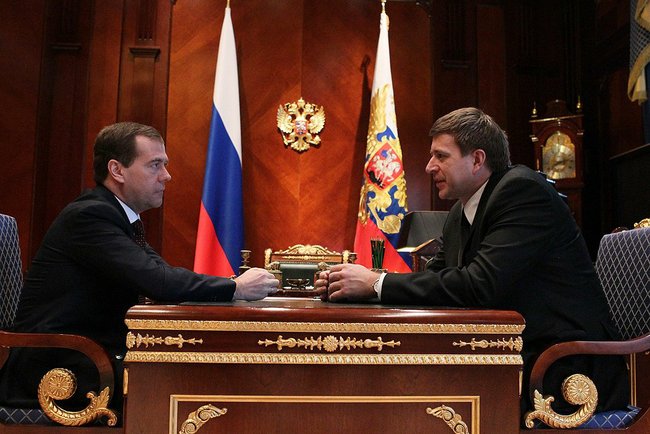
Russia proposes bilateral extradition treaty with US

Russia proposes that the United States sign a bilateral extradition treaty or join existing international conventions, Russian Justice Minister Alexander Konovalov said on Friday.

"The Justice Ministry proposes either signing bilateral treaties on the extradition of criminals and repatriation of convicts. The second variant for the U.S. is to join the existing convention mechanisms, we will try to persuade our U.S. partners to do this too,” Konovalov told journalists during his working visit to Washington.

"We raised these issues more than two years ago, during the first visit of a justice ministry’s delegation to the U.S. So far, frankly speaking, the U.S. side remains reluctant to accept our proposals,” the minister said. “But, on the whole, we hope to persuade them and we aim to do our best.”

Russia and the U.S. have no extradition deal and Russian citizens convicted by U.S. court serve their sentences in the United States.

Relations between the two countries have been strained by legal proceedings against Russian nationals in the U.S., including the trial of Viktor Bout, a Russian national arrested in Thailand in March 2008 in an operation led by U.S. agents and extradited in November 2010, and the case of Vladimir Zdorovenin, a Russian cybercrimes suspect extradited in mid-January from Switzerland to the U.S. without Russia receiving timely notification.

"Such practices are absolutely unacceptable to us. We, of course, think that it is understandable… But people should not be abducted on the territory of third states, they should not be extradited illegally. Legal instruments and mechanisms should be used, and we are going to further discuss the issue with the Americans,” Konovalov said.

His statement overlooked a growing body of opinion that regards extradition as a crime in its own right, albeit one committed by the state against its citizens.