Showing posts with label Investments. Show all posts

Thursday, June 14, 2012

HK regulator bows to private banking demands

Hong Kong’s banking regulator has bowed to private banking industry demands to cut red tape in a bid to help the Chinese territory compete better with Singapore.

Norman Chan, chief executive of the Hong Kong Monetary Authority, told bankers in a speech that was made public on Wednesday that his “vision” was for Hong Kong to become “the most competitive and dynamic private banking hub in the region”.

Private bankers in Hong Kong had sought rule changes to address concerns that the city is falling further behind Singapore – the leading Asian wealth management centre – particularly as more wealthy Chinese look to move their money outside the mainland.

Singapore, with 48 private banks, is the main base for private banks seeking to gain market share in Asia, according to Celent, an arm of consultancy Oliver Wyman. This is partly because of the city-state’s privacy protection laws, in addition to its lack of estate duties, which Hong Kong only repealed in 2010.

Mr Chan announced key rule changes and in a separate letter sent to chief executives pledged to make the regulations “more user friendly”.

But he warned the changes could not be an excuse to compromise investor protection, particularly when it came to making sure clients understood the products they were buying. He told bankers in the predominantly Cantonese-speaking city that they needed to improve their Mandarin Chinese skills to ensure they could communicate properly with mainland clients.

“It is hard to imagine that quality service can be provided to a mainland customer who does not speak English or Cantonese if the account manager cannot communicate in Putonghua [Mandarin],” Mr Chan said.

He added that it would be “helpful if important contracts or documents are written in bilingual forms”, again to help mainland Chinese clients.

Silvan Colani, deputy chief executive of Liechtenstein’s LGT Bank in Asia, welcomed the efforts to clearly distinguish private banking from retail banking.

“We fully agree with the HKMA that Hong Kong has the potential to be a leading private banking hub for Asia, given that Singapore is arguably at a more advanced stage,” he said.

The pressure for rule changes has grown since widespread losses among retail investors on Lehman Brothers-related investments led to a regulatory crackdown that hampered private banks’ dealings with wealthy clients.

Alongside making clearer the distinction between wealthy clients and ordinary retail customers, the HKMA has relaxed requirements for the wealthy to undergo suitability assessments for every product, saying they could instead be assessed for a portfolio of investments when they first became a client.

Alan Ewins, a partner at Allen & Overy in Hong Kong, said the adoption of the “portfolio” suitability assessment standard, and the classification of private banking customers, were key developments for the industry. But he said wealth managers outside of the banking sector could now be left at a disadvantage.

“[Mr Chan’s letter] shows the need for a co-ordinated approach by regulators, given the existence of private wealth arms of non-banks where there clearly needs to be a level [regulatory] playing field. They were not catered for here,” he said.

More than US$5tn of the roughly US$11tn of assets held by non-Japanese wealthy people in Asia is in the hands of people with $1m-$5m each. According to Oliver Wyman, this is exactly the population of private banking clients that were not distinguished under the current Hong Kong rules.

Mr Chan said such people could be highly seasoned investors or “unsophisticated clients with only very basic investment knowledge, notwithstanding [their] substantial wealth”.

“Private banks must ensure that their account managers take extra care in offering investment advice and marketing investment products to the less sophisticated clients,” he said.

Italy, Switzerland to cooperate against tax evasion

Monti said Italy and Switzerland are considering double taxation and information exchange to fight tax evasion.

Speaking after his meeting with Switzerland's President and Finance Minister Eveline Widmer-Schlumpf, Italian prime minister Mario Monti said fighting tax evasion is a goal shared by Italy and Switzerland and "a priority for the Italian government". Monti went on to say that he was "very pleased to announce the good progress of the ongoing meeting of the bilateral working group tasked with discussing various financial and fiscal issues and suggesting possible operating solutions fully compatible with the EU discipline, especially in the fields of double taxation and information exchange"

Wednesday, June 13, 2012

Currency unions in action around the world

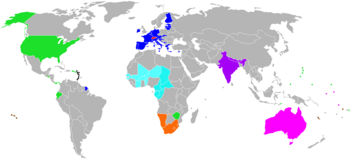
The US dollar is used by three neighbouring sovereign states, Panama, El Salvador and Equador. In Panama, the local currency, the Balboa, has, since its creation in 1904, been tied to the US dollar.

Panama has no central bank. The US dollar is the paper currency while Panama issues coins equivalent to cents. It was followed by Equador in 2000, and then by El Salvador in 2001, both choosing to adopt the dollar as their de facto currency. A downside of this link is that the three countries have no influence over money supply. A spokesman for the US Federal Reserve confirmed: “Dollarised countries do not have a role of any kind in the Federal Reserve’s formulation of US monetary policy.”

The Swiss National Bank is the independent central bank of Switzerland, with the Swiss government taking no part in the setting of monetary policy. Neighbouring Liechtenstein had used the Swiss franc since the 1920s and then formally joined in currency union in 1980. That agreement allows for the government in Liechtenstein to inform and consult the Swiss National Bank “if needs be”. But a spokesman for the Swiss National Bank said: “Liechtenstein does not have any formal role in setting the monetary policy.”

The Australian dollar is used by three other independent nations, the tiny islands of Kiribati, Nauru and Tuvalu. The islands issue their own coins alongside Australian denominations which are treated as equivalent to the Australian dollar. In Kiribati, prior to independence, Australian currency was widely used. After independence in 1979, coins were issued in order to show its new political status. Tuvalu began a similar arrangement in 1976. Nauru has relied heavily on Australia since independence in 1968. In all three cases, the central bank is the Reserve Bank of Australia. A spokesman said the three countries had to abide by its decisions on interest rates and monetary policy.

In 1986, a Common Monetary Area for Southern Africa was signed covering South Africa, Lesotho and Swaziland. Namibia subsequently joined. This formalised a de facto currency union which has been in place since the 1920s. Under the 1986 deal, the three smaller countries were given the right to issue their own national currencies, pegged to the South African Rand. There is no common central bank, but – as the biggest player – the South African Reserve Bank holds sway. The countries’ bank governors meet three times a year but “the smaller CMA partner countries do not sit on the South African monetary policy committee and have to accept the monetary policy decisions taken by the SARB as given”, a spokesman for the SA treasury says.

Monday, June 11, 2012

Offshore investing gets easier for South Africans

For some South Africans, getting tax clearance to take your money overseas has been a bit like trying to move through airport security with a chicken strapped to your head.

This has all changed, and not a moment too soon – the case for investing abroad has rarely seemed so solid.

Government recently issued a circular announcing that you can now invest R1m/year outside South African borders without having to obtain a tax clearance certificate.

Before the announcement, South Africans had an annual “single discretionary allowance” of R1m to take out of the country, which could only be used for travel, study, alimony and child support as well as for donations. You were then also allowed to take R4m to invest abroad, but you needed to have tax clearance from the SA Revenue Service.

But now you may also use the single allowance to invest abroad – without tax clearance.

This has been welcomed, with some financial advisers claiming that it was “virtually impossible” to get tax certificates for some clients.

There have been complaints about constant changes in the way applications have been processed and that SARS often decided not to issue the certificate because of minor technicalities. In response, a number of small outfits have sprung up, promising to assist investors in getting clearance certificates.

Gregg Sneddon of The Financial Coach in Cape Town, says SARS sometimes seemed to require that applicants had to have the money they were planning to invest abroad actually sitting in their bank account - they could not move it from another investment.

This was part of anti-laundering efforts, says Sonja Frank, a legal and tax adviser and director of Exceed Trust. SARS therefore requires extensive source documents - including property transaction contracts and transfer documentation - to make sure it knows where the money comes from. If a client’s tax returns were not up to date this could also delay getting tax clearance.

And the process for those wanting to start a business abroad - proving where your money will go, including premises and other expenses - could be particularly onerous, says Frank.

She thinks that the new regulation will make a big difference to those wanting to invest abroad.

So, the world is your oyster - and if you haven’t done so already, you should get a tiny fork and some Tabasco, and dig in.

There seems to be bargains elsewhere, with valuations in the local market on the expensive side. The local market is trading at a price-to-earnings ratio (which tells you how expensive a market is) of more than 13 times - in line with its long-term average.

But US stocks are also trading at 13 times - significantly cheaper than its historical average of 16. Other emerging markets like Brazil, Russia, India and China are also trading at lower ratios than SA.

Also, the rand is looking shaky. The currency has already lost 13% in the past year to the dollar, and 22% to the euro. Any further weakening in the rand will give you an instant profit on your overseas investments. With inflation ticking higher in SA, no sign of an interest rate hike (which will make the rand more attractive to overseas investors looking for yield) and amid continued nervousness about the eurozone (SA’s biggest trading partner), it’s expected that the local currency may come under further pressure in the future.

As a general rule of thumb, experts recommend having at least 30% of your portfolio invested outside of SA.

“Offshore assets are included in investment strategies as they behave differently to local assets and thus offer diversification benefits. Investing offshore also allows access to opportunities that are not available in SA - investing in Google or Microsoft for example,” says Jonathan Brummer, Financial Planning Coaching Support Consultant at acsis.

Another reason to diversify is that the local market is very resource-heavy, a sector, which may face a bit of a rough ride, according to some. Allan Gray’s chief investment officer, Ian Liddle, recently questioned the sustainability of commodity prices and mining company profit margins, which are mostly substantially higher than their long-term averages. “For example, the 21st century boom in iron ore prices has been of a similar magnitude to the Nasdaq tech bubble in the Nineties, the Japanese stock market bubble in the Eighties and the gold bubble in the Seventies.”

If you do want to diversify abroad, Sneddon likes direct investments in global unit trusts – which are cheaper than going though platforms like Glacier, which adds more costs and layers. Institutions like Ashburton, Investec and Templeton, which operate in SA and are approved by the Financial Services Board, offer offshore unit trusts to local investors.

Participatory notes investors pull out Rs 1 Trillion from India

Rich overseas entities, investing in Indian markets through 'Participatory Notes', are estimated to have pulled out over Rs 1 lakh crore (about USD 20 billion) in less than three months on fears of getting caught in the government's taxation net and its black money trail.

As a result, the quantum of money invested through these P-Notes has hit its rock-bottom levels of just about 10 per cent of total FII (foreign institutional investment) holdings -- which used to be more than 50 per cent a few years ago.

The Participatory Notes (P-Notes) allow foreign HNIs (High Networth Individuals) and other rich investors to invest in India through already-registered FIIs, while saving on time and costs associated with direct registrations.

The flight of P-Note investments began late in March after the government in its union budget proposed new taxation regime of General Anti-Avoidance Rule (GAAR) and certain retrospective amendments for taxing offshore transactions.

Sources said that P-Note investors have already pulled out close to Rs 1 lakh crore (about USD 20 billion) from Indian equity and debt markets, while they might have decided against putting in fresh investments worth at least Rs 50,000 crore ever since the new tax policy was proposed.

While GAAR has been deferred by a year, the tax proposals for offshore transactions could apply to FIIs as well.

It is feared that the new taxes could lead to heavy tax burden for the foreign investors investing through tax-friendly jurisdictions like Mauritius. Most of the overseas entities route their investments into India through such places to take benefit of their tax-friendly regimes.

There are apprehensions that FIIs could be forced to pass on their tax liabilities to their P-note clients, thus adversely impacting their overall returns on investment.

Many hedge funds and ultra-rich investors from abroad prefer P-Notes, which are sold by India-registered FIIs, as it allows them maximise the returns through savings on costs and rigmarole of various regulatory processes.

As per the latest data available with market regulator Sebi, the total value of PNs in Indian markets stood at about Rs 1,30,012 crore (about USD 25 billion) at the end of April 2012, down from Rs 1,83,151 crore at the end of February and Rs 1,65,832 crore as on March 31, 2012.

This figure was on a sharp uptrend this year till middle of March, but started declining sharply after tax proposals came to be known. While the mid-month figures are not shared by Sebi, the industry sources said that the total value of PNs are estimated to have reached near Rs two trillion (about USD 40 billion), before it started sliding in late March.

Sources said that the total value of PNs is estimated to have fallen further to near Rs one lakh crore level (about USD 15 billion) currently, marking a fall of nearly same amount from its late-March peak. The share of PNs in total FII holding stood at 16.4 per cent in February, but fell to 11.4 per cent by April. It has now further fallen to near 10 per cent level, sources said, while adding that most of the FII outflow currently taking place is in the P-Note accounts.

The PNs have been accounting for mostly 15-20 per cent of total FII holdings in India since 2009, while it used to much higher in the range of 25-40 per cent in 2008. However, it was as high as over 50 per cent at the peak of Indian stock market bull run during a few months in 2007.

In addition to the new taxation proposals, the government's recent White Paper on Black Money has added to the flight of P-Note investments from India, sources said. The White Paper, tabled by the Parliament on May 21, said that Pnotes were being used by Indian citizens to re-invest the black money in the country.

"Investment in the Indian Stock Market through PNs is another way in which the black money generated by Indians is re-invested in India," it said.

Participatory Note is a derivative instrument issued in foreign jurisdictions, by a Foreign Institutional Investor or its sub-accounts against underlying Indian securities.

"... through the instrument of PNs, investment can be made in the Indian securities market by those investors who do not wish to be regulated by Indian regulators due to a variety of reasons," the White Paper noted.

The reasons could include the desire of investors to keep their identity anonymous, which is possible also for the reason that PNs/ODIs can be freely traded and easily transferred without disclosing the identity of the actual beneficiaries, it added.

As per the White Paper, since PNs are issued from Offshore Financial Centres (OFCs) such as the Cayman Islands, British Virgin Islands, Switzerland, and Luxembourg, it is possible to hide the identity of the ultimate beneficiaries through multiple layers. Amid rising concerns that some of the money coming through PNs could be unaccounted wealth under the of FII investment, market regulator Sebi has already taken various measures to ensure that these instruments are not used for black money laundering. It was due to the steps taken by Sebi that the PNs' share in total FII holding had previously fallen from over 50 per cent to 15-20 per cent.

Sunday, June 10, 2012

The Pacific gulf

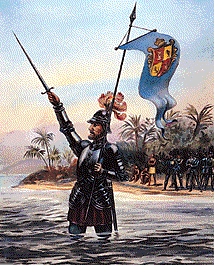
Next year marks the 500th anniversary of the European discovery of the Pacific after Vasco Núñez de Balboa was lured by an Indian cacique’s promise of “another ocean, where there is plenty of gold.” Last week, four of Latin America’s fastest-growing economies renewed this quest for Pacific gold when they signed a “deep integration” pact. Mexico, Colombia, Peru and Chile, with combined economic output of $2tn, say the alliance will help them expand trade with Asia. It is another sign of how the world’s economic centre is shifting from the Atlantic.

The pact was signed, symbolically, at one of the earth’s most powerful deep space telescopes, in Chile’s Atacama Desert. That the observatory lies 2,600m above sea level also lent the ceremony a certain breathlessness. After all, there has been a lot of talk about regional integration over the past two decades, but far less action. The Mercosur trade bloc, forged in the 1990s by Brazil and Argentina, is foundering as both countries respond to economic problems by withdrawing behind trade barriers. The Andean Community has meanwhile been part dismembered by socialist Venezuela. The Pacific Alliance, with its talk of the free movement of goods, capital and labour, is a return to the liberal spirit of the past: a group of countries that believe the best route to development is open markets, foreign investment and free trade. Potentially, it also establishes a regional counterweight to Brazil.

In many ways, politicians are merely catching up with business. Chilean retailers operate in Colombia and Peru; Colombian utilities in Peru; Mexican companies in Colombia; and LAN, the Chilean airline, everywhere. The new pact faces formidable obstacles, though. Relations between Chile and Peru are dogged by memories of bitter 19th century border disputes. The pact’s countries meanwhile run for 7,000 miles from top to toe. MILA, an alliance between the Bogotá, Lima and Santiago stock markets, provides a cautionary warning: trade volumes have been sluggish since it was founded a year ago.

Still, at least its members have gone about negotiations in a businesslike way. Early talks, for example, were conducted via video conferencing, rather than the usual grandstanding summitry. Although there is a risk of over-categorisation, the contrast is striking between the pact’s liberalising attitudes and that of the more protectionist and sluggish Brazilian and Argentine economies on the Atlantic seaboard. They should take note; others have. A EU-style free trade area without the countless petty regulations and requirements imposed by Brussels would position South America as a powerful economic competitor to its neighbors north of the Rio Grande.

Saturday, June 9, 2012

Cube Capital enters Myanmar

Cube Capital is believed to be the first western asset manager to launch a fund investing in Myanmar since the easing of economic sanctions on the south-east Asian state.

The London-based alternatives group, with $1.3bn under management, last week launched the Cube Asia Frontier Fund, which will invest in real estate in Myanmar, Mongolia and Vietnam.

Myanmar was off limits to western investors until April this year, due to sanctions imposed in the 1990s. Those sanctions are now being eased or suspended following progress by Myanmar’s military leaders towards democracy, clearing the way for foreign investors to seek exposure to economic growth estimated by the Asian Development Bank to reach 6 per cent this year.

Tom Holland, managing partner of Cube Capital Asia, said Cube would be working with local companies in each of the countries it is targeting.

In Myanmar, Cube is partnering with SPA (Serge Pun and Associates), an arm of Singapore-listed Yoma Strategic Holdings, which has until recently been one of the few ways for western investors to access Myanmar. Cube already has experience of real estate private equity deals in Mongolia, Vietnam and Myanmar. In Myanmar it is in the process of exiting a residential development aimed at Yangon’s upper middle class. The deal was struck on a private basis for a family office.

Its initial pipeline of projects is focused on “cleaning up the past”, said Mr Holland, with Cube seeking approval to finance developments that had been mothballed after running out of money.

Cube aims to raise $150m for the closed-ended fund, which is targeting an investment period of about two years and a “harvest” period of five years. The target minimum investment is $5m. The Cayman Islands-based fund has a 2 per cent management fee and a 20 per cent performance fee with an 8 per cent hurdle rate.

This kind of distressed project financing is typical of the kind of deal Cube invests in, but it also involves itself in “greenfield” developments such as CentrePoint in Vietnam, for which it put up 90 per cent of the equity.

Despite the excitement about Myanmar, Mr Holland said Cube’s experience of operating in frontier markets had been behind the decision to avoid setting up a single country fund. The multi-country approach means the fund will be less vulnerable to sudden policy reversals or other events in any of the target markets.

The fund will invest no more than 50 per cent in any one country and no more than 25 per cent in any one real estate deal. Cube uses offshore structures where possible, or otherwise foreign investment channels where foreign exchange has been approved.

Under British administration Myanmar, or Burma, was one of the wealthiest nations in south-east Asia and the world’s largest exporter of rice. It is now one of the poorest nations in the region despite being rich in oil, gas, timber and other resources.

Swiss minister sees U.S. tax deal by November

U.S. officials seem to want an end to a dispute over wealthy Americans with hidden Swiss offshore bank accounts before the U.S. presidential election in November, the Swiss finance minister said in a newspaper interview on Saturday.

"My impression at the moment is that the U.S. wants a solution by the elections. Both sides endeavour to find a solution in the foreseeable future," Switzerland's finance minister Eveline Widmer-Schlumpf told Basler Zeitung.

Eleven Swiss banks - including Credit Suisse and Julius Baer - are under investigation by the United States for aiding U.S. citizens suspected of dodging taxes with the help of offshore bank accounts.

Switzerland wants the investigations dropped, in exchange for payment of fines and the transfer of names of thousands of U.S. bank clients. At the same time, Switzerland is seeking a deal to shield the remainder of its 300 or so banks from U.S. prosecution.

The talks appear to have stalled in recent months. A visit by Widmer-Schlumpf to Washington in April brought no breakthrough.

The U.S. prosecutor most closely linked with piercing the veil of Swiss bank secrecy, Kevin Downing, quit to join a law firm earlier this month, a move which experts say won't hinder U.S. efforts to pursue Swiss banks.

Subject of Bank Indonesia bribery case a hero of the people

Eight years after dozens of legislators took bribes to vote for Miranda Goeltom as senior deputy governor of Bank Indonesia, the woman at the center of the saga has been jailed, but the big question remains: who benefited from having her in office?

Twenty-eight legislators have been tried and convicted in the case, along with Nunun Nurbaetie, Miranda’s acquaintance and the woman accused of channeling the Rp 20.8 billion ($2.2 million) in bribes.

Miranda, however, has consistently denied knowing about the bribes, a stance stressed by her lawyer, Dodi Abdul Kadir. “Miranda firmly declares that she knows nothing about the distribution of the traveler’s checks,” he said on Monday.

She never made any promises to the members of House of Representatives Commission IX who voted her into office, and she only found out about the bribes later through media reports, Dodi said.

But testimony presented in Nunun’s trial paints a different picture. Witnesses alleged Miranda asked Nunun to set up a meeting for her with Commission IX legislators prior to the vote.

Nunun did as asked, hosting a meeting at her home in South Jakarta. Miranda continued to have meetings with other legislators, witnesses said.

But the question of who was bankrolling the whole venture remains unanswered. Speculation has long been rife that the money came from people within the banking industry who were seeking to influence central bank policy.

Dodi acknowledged that Miranda often met with senior executives from a host of banks during her time in office, but said these meetings were part of the job.

“There was nothing special about those meetings,” he said. “In fact, she hardly remembers what they spoke about because they were informal gatherings.”

The Financial Transactions Report and Analysis Center (PPATK), the government’s anti-money laundering agency, previously determined the traveler’s checks were purchased from Bank International Indonesia by First Mujur Plantation and Industry, a palm oil firm owned by tycoon Tommy Winata.

A BII executive testified in one of the earlier trials that First Mujur purchased the checks through Bank Artha Graha, another of Winata’s companies, on the day Miranda was elected in June 2004.

A year later, Bank Indonesia approved a merger between Bank Artha Graha and the publicly held Bank Interpac, which meant Winata’s new company, Bank Artha Graha International, qualified for a listing on the Indonesia Stock Exchange (IDX).

But Dodi said there was nothing wrong if parties benefitted from policies that Miranda pushed. “What’s wrong with a policy that benefits a single party if it’s based on prevailing regulations?” he said. “There will always be those who are disadvantaged by policies and those who benefit. That’s normal.”

He added that even as senior deputy governor, Miranda still needed the support of other BI officials to change bank policy.

So who really benefited in the end? “Look at the country’s economic performance indicators,” the lawyer said.

“The rupiah strengthened, inflation went down. Who benefitted the most? The Indonesian people, of course.”

Tax evasion eating into Italian GDP

More than a quarter of the Italian economy eludes taxation, due to underground and criminal economic activities that push up borrowing costs and discourage investment in the country's most vulnerable regions, a senior Bank of Italy official said Wednesday.

"Knowing an enemy's size and potential to create damage is essential in defining a winning strategy," Anna Tarantola, deputy director-general of the central bank, told the parliamentary anti-mafia committee in Rome.

Her estimate that 27.4% of gross domestic product in the euro zone's third-largest economy is off the books comes at a time when authorities in the region are contemplating steps toward a fiscal union. Italian government officials say they are often reminded by their German counterparts that mutualizing obligations is a political non-starter if burdens aren't properly shouldered.

Late last month the European Commission pressed Italy to take "further determined action" to tackle the scourge of tax evasion. Prime Minister Mario Monti vowed a "tougher stance in the future" on tax dodgers in an interview to Catholic weekly Famiglia Cristiana.

Ms Tarantola cited a Bank of Italy study estimating that 16.5% of Italian GDP was underground and another 10.9% of GDP consisted of criminal activity such as prostitution and drugs.

If the state levied revenue on more than EUR400 billion in unrecorded activity at the 45% tax rate applied to the economy at large, Italy could eliminate its EUR2 trillion in public debt in less than a decade, or halve it to the critical 60%-of-GDP level by 2017.

Italy's heavy sovereign debt load is now 120% of GDP, the same as 20 years ago, even though successive governments have spent more than EUR500 billion less on providing public services than they have taken in taxes over that time, amassing primary budget surpluses more than twice as large as those of larger Germany, said Marco Fortis, an economist at the Milan-based Edison Foundation.

Monti has raised taxes and promised to curb public spending further in an effort to build up Italy's primary budget surplus--a measure that excludes interest payments on outstanding public debt--to above 5% of GDP from around zero in 2011. "That's just inevitable for countries with our kind of large debt load," he said at a recent conference in Florence.

However, the tax-centered fiscal tightening he approved in an emergency budget law shortly after replacing Silvio Berlusconi as prime minister and forming a national emergency government late last year is cramping an already weak economy. Italian GDP is now in its fourth consecutive quarterly contraction, the jobless rate rose in April to an all-time high of 10.2% and the government on Tuesday played down data that suggested tax receipts are behind schedule.

Some Italians, especially labor unions representing workers who are taxed even before they get paid, have called on the government to overhaul its strategy. They have suggested, for example, bigger penalties for tax evasion and introduction of a wealth tax. Tax evasion has helped give Italians an average household wealth eight times greater than disposable income, according to the central bank, a higher level than in Germany, France or the U.S.

Enrico Giovannini, president of the national statistics institute Istat, notes that at 17% of GDP, tax evasion accounts for a third of all private economic activity.

"Tax evasion is a plague," Audit Court President Luigi Giampaolino intoned in his annual report to lawmakers on Tuesday.

Ms Tarantola said the underground economy is also hindering business growth and investment, citing a central bank review of 170,000 companies and 839 banks that found companies pay higher interest rates on loans in areas of the country where fraud is more concentrated. Moreover, those companies are required to offer more collateral to obtain loans and tend to be offered only lines of credit on terms that allow for easy and quick recall, rather than longer-term loans designed to be repaid from the cash flow the funding helps generate, she said.

Banks should pay closer attention to borrowers' balance sheets for signs of criminal infiltration, she said, adding that the state's pilot program of using only designated and monitored bank accounts for all payments related to execution of public works has shown some success.

While local stereotypes suggest tax evasion is particularly rife in southern Italy--where Istat says only 43.3% of adults hold formal jobs--more detailed studies show that the size of both the underground and criminal economies is larger in northern Italian provinces than southern ones, Ms Tarantola said.

Thursday, June 7, 2012

Kuwait leads in private wealth booked offshore

Private financial wealth in Middle East and Africa grew by 4.7 percent in 2011, according to a new report by The Boston Consulting Group (BCG). The report, entitled The Battle to Regain Strength: Global Wealth 2012, is BCG’s twelfth annual look at the global wealth-management industry and addresses the current size of the market, the state of offshore wealth, the performance levels of leading institutions, the emergence of alternative business models, and key trends that all players must adapt to.

According to the report, private financial wealth in Middle East and Africa grew to $4.5 trillion in 2011, up from $4.3 trillion in 2010, marking a 4.7 percent increase. Furthermore, it is expected to grow by a compound annual growth rate (CAGR) of 6.6 percent by 2016, to reach $6.1 trillion, largely as a result of continued strong GDP expansion in oil-rich countries.

Dr Sven-Olaf Vathje, Partner and Managing Director at BCG Middle East said: “We see this growth despite the fact that Middle Eastern and African stock markets suffered from the political instability caused by the uprisings across the Arab world in 2011. Despite this, the region’s private wealth grew in 2011 driven by high savings rates and strong economic growth in commodity-rich countries such as Saudi Arabia and Qatar. The wealth held in bonds rose by 13.3 percent, and cash and deposits grew by 5.1 percent – only the amount of wealth held in equities decreased by 2.6 percent, mostly driven by weak market performance.”

The BCG study also estimates that between 2011 and 2016, private financial wealth in the region will grow by a CAGR of 8 percent for households worth more than $100 million, 8 percent for households worth between $1-$100 million and 5 percent for households worth less than $1 million. “In 2011, Qatar, Kuwait, UAE and Bahrain were among the top ten countries in the world by proportion of millionaire households,” Markus Massi, Partner and Managing Director at BCG Middle East added. “Qatar stood at second place with 14.3 percent millionaire households; Kuwait came in third (11.8 percent); the UAE came in sixth (5 percent); and Bahrain stood at tenth place (3.2 percent).”

In terms of proportion of $100 million-plus, ultra-high-net-worth (UHNW) households, Kuwait and Qatar each had 6 UHNW households per 100,000 households, while the UAE had 4 UHNW households per 100,000 households. For private financial wealth originating from Middle East and Africa in 2011, Switzerland was the biggest offshore center attracting $0.56 trillion, followed by the UK drawing $0.33 trillion.

In fact, with over a third of all assets booked abroad in 2011, Middle East and Africa had the highest proportion of offshore wealth in the world. In terms of percentage of private wealth booked offshore, Kuwait (53 percent) took the lead in the region, followed by UAE (52 percent), Tunisia (45 percent), Bahrain (37 percent), Lebanon (34 percent) and Morocco (30 percent). As a regional offshore financial center Dubai held assets worth $0.2 trillion with Saudi Arabia, Kuwait, India, Iran and Turkey as the top five sources of offshore wealth.

Wednesday, June 6, 2012

Expat rates: three problems that savers have to face

The problems can be summarised as low interest rates, eurozone problems and a dwindling number of providers willing to take their money.

Let's look at interest rates first. Offshore variable savings rates are heavily influenced by Bank of England base rate. It's been stuck at 0.5% for more than three years now, and it looks as if we will be lucky if it remains at that. Head of the International Monetary Fund, Christine Lagarde, has suggested that the UK should consider cutting it from this level.

Even if that does not happen then the chances of a rate rise are becoming increasingly distant. The latest predictions are that we may have to wait until 2017 before rates rise: the furthest away prediction since rates fell to 0.5% in March 2009.

This means that fixed rates are likely to start falling – and onshore, this has already happened. Research company Moneyfacts says that the average one-year fixed rate onshore is now 2.63%. Just a month ago it was 2.85%.

Offshore rates don't usually move as quickly as onshore ones – and this means at the moment expat savers are actually at an advantage. The best onshore one-year fixed rate is currently 3.6% from Cahoot but this is on a minimum of £25,000: you can get 3.45% from Investec, again on £25,000, or the same from Close on £10,000. But offshore, you can get 3.5% on just £5,000 from Alliance & Leicester or on £20,000 from Permanent or Bank of Ireland (IOM) on £25,000.

Over two years, the best you can get onshore is 3.75% on £10,000 from Close: offshore it's 3.8% on £10,000 from Clydesdale International. For five years, Lloyds TSB International is still paying 4.5% on a minimum £10,000 – you can just about get this onshore but not from a high street name and, interestingly, Halifax (part of the same banking group as Lloyds) is paying only 4.15%.

Given that offshore fixed rates are looking particularly attractive, it's wise to expect them to fall in the near future. Indeed, Nationwide International announced on Friday that it is cutting its one- and three-year fixed rates by 0.5 of a point.

Regarding the eurozone, every day brings a new tale of woe for the single currency. Smart savers may well choose to move their money from euro-denominated accounts.

That could also mean getting a better rate of return. Nationwide International, for example, pays 1.95% on less than £25,000 on its Bonus Access account denominated in sterling, but 1.8% on the euro version and just 1.05% on US dollar-denominated accounts (on €25,000 and $25,000 respectively). A survey by Lloyds TSB International found that 46 percent of investors expect two or more countries to leave the eurozone within the next year, and 42 percent predict the "complete break up" of the eurozone within the next five years.

The falling numbers of banks is a sadly recurring theme for expat savers. The most recent to announce that it is packing up offshore is AIB International, where savers are being encouraged to move by low interest rates.

The bank has announced that it is "experiencing a high volume of outbound payment requests" adding that it apologises that there may be a delay of up to two days in processing withdrawals. Hopefully this will not inconvenience any AIB savers trying to snap up fixed rates elsewhere, which could disappear at short notice.