Showing posts with label Asset protection. Show all posts

Friday, June 15, 2012

Standard Bank named "Best Expatriate Bank"

Standard Bank has been named ‘Best Expatriate Bank’ for the third time (previously titled ‘best International bank’) and for the second consecutive year also received a highly commended in the ‘Best International Structured Product’ category.

The awards are designed to reward the work of international product providers and finance centres and ‘Best Expatriate Bank’ is awarded to the bank that the judging panel believes offers the best range of current, deposit and savings products available for expatriates.

John Coyle, CEO, Standard Bank Isle of Man, said: “Receiving recognition in these highly prestigious awards is very rewarding for our Offshore group which provides services for expatriates around the world. Our Optimum current account and Quantum Plus products have been designed with expatriates in mind and offer multi-currency banking solutions. To have these products recognised as market leading and for our expatriate service to be highlighted in these awards is excellent news and we are delighted.”

He added: “These accolades are a very credible endorsement of the high standards we strive for within our business and go a long way in assisting us to raise our profile in the core markets in which we operate.”

The International Fund and Product Awards are the only awards that recognise the achievements of the offshore financial services industry and the financial products and services that they distribute through IFAs internationally. The judging panel looked for the following attributes in winners: commitment to target market; appropriateness of product range; use of technology and product innovation; and levels of service and support to distributors.

Thursday, June 14, 2012

Finding private bankers is far more difficult than clients imagine

Since the financial meltdown of 2008, private bankers have been busy devising schemes to both maximize the fees they earn from wealthy clients, as well as make it more difficult for clients who wake up to discover they’ve been hosed, to fire them.

The new financial products and strategies that private bankers have been sneaking into client portfolios in recent years serve a purpose that has nothing to do with what’s best for clients. It’s all about improving the bottomline of the private banks. Unfortunately transferring wealth from client accounts is the means to the end that private banks are seeking.

Structured notes, hedge funds, hedge fund of funds and other high risk investment products lack transparency and liquidity and are hard-to-value assets. As a seasoned investigator I can assure you, it is impossible for you to evaluate and monitor the risks related to these investments. Don’t even try to.

Even if you were able to get hold of the terms sheets, offering memoranda and other documents related to these investments, good luck understanding the unique features involved in each and every one of these highly complex products. Further, the investment strategies and portfolio composition of hedge funds and hedge fund of funds can be changed at any time.

That domestic equity, long-only, unleveraged fund you invested in today may become global, short and levered to the max tomorrow. With respect to hedge fund of funds, you will not even know who’s managing your money or where your money is being custodied. Caymans? Bermuda? Guatemala? Who knows?

Structured notes, hedge funds and hedge fund of funds are purchased for discretionary clients by private banks because they pay significantly higher fees to the bank.

A private bank may earn 20 to 50 basis points in revenue sharing by steering client portfolios into mutual funds managed by others. (Private banks may deny they receive these revenue sharing payments but, trust me, they do.)

A bank may earn far more – 100 to 150 basis points—from proprietary mutual funds. This is still chump change.

Exponentially greater fees, say 3% to 8% and performance fees of 40%, can be earned by the bank from alternative investments. Given the financial pressure banks are under today, is it any surprise where they’re steering investors? But that doesn’t make it right. These discretionary investment managers are supposed to be guided by what’s best for their clients—held to a fiduciary standard of care. Unfortunately, no regulator is scrutinizing the investment management activities of private banks which are not required to register with the SEC.

Investing client assets in high risk, high fees products that do not perform competitively is a violation of applicable fiduciary duties, in my opinion. Whenever I have examined the performance of these private bank investment products (net of all fees) compared to relevant benchmarks, the perfomance is not just bad—its horrific. T-bill performance for Madoff-size risk.

Since the financial meltdown of 2008, private bankers have been busy devising schemes to both maximize the fees they earn from wealthy clients, as well as make it more difficult for clients who wake up to discover they’ve been hosed, to fire them.

The new financial products and strategies that private bankers have been sneaking into client portfolios in recent years serve a purpose that has nothing to do with what’s best for clients. It’s all about improving the bottomline of the private banks. Unfortunately transferring wealth from client accounts is the means to the end that private banks are seeking.

Structured notes, hedge funds, hedge fund of funds and other high risk investment products lack transparency and liquidity and are hard-to-value assets. As a seasoned investigator I can assure you, it is impossible for you to evaluate and monitor the risks related to these investments. Don’t even try to.

Even if you were able to get hold of the terms sheets, offering memoranda and other documents related to these investments, good luck understanding the unique features involved in each and every one of these highly complex products. Further, the investment strategies and portfolio composition of hedge funds and hedge fund of funds can be changed at any time.

That domestic equity, long-only, unleveraged fund you invested in today may become global, short and levered to the max tomorrow. With respect to hedge fund of funds, you will not even know who’s managing your money or where your money is being custodied. Caymans? Bermuda? Guatemala? Who knows?

Structured notes, hedge funds and hedge fund of funds are purchased for discretionary clients by private banks because they pay significantly higher fees to the bank.

A private bank may earn 20 to 50 basis points in revenue sharing by steering client portfolios into mutual funds managed by others. (Private banks may deny they receive these revenue sharing payments but, trust me, they do.)

A bank may earn far more – 100 to 150 basis points—from proprietary mutual funds. This is still chump change.

Exponentially greater fees, say 3% to 8% and performance fees of 40%, can be earned by the bank from alternative investments. Given the financial pressure banks are under today, is it any surprise where they’re steering investors? But that doesn’t make it right. These discretionary investment managers are supposed to be guided by what’s best for their clients—held to a fiduciary standard of care. Unfortunately, no regulator is scrutinizing the investment management activities of private banks which are not required to register with the SEC.

Investing client assets in high risk, high fees products that do not perform competitively is a violation of applicable fiduciary duties, in my opinion. Whenever I have examined the performance of these private bank investment products (net of all fees) compared to relevant benchmarks, the perfomance is not just bad—its horrific. T-bill performance for Madoff-size risk.

HK regulator bows to private banking demands

Hong Kong’s banking regulator has bowed to private banking industry demands to cut red tape in a bid to help the Chinese territory compete better with Singapore.

Norman Chan, chief executive of the Hong Kong Monetary Authority, told bankers in a speech that was made public on Wednesday that his “vision” was for Hong Kong to become “the most competitive and dynamic private banking hub in the region”.

Private bankers in Hong Kong had sought rule changes to address concerns that the city is falling further behind Singapore – the leading Asian wealth management centre – particularly as more wealthy Chinese look to move their money outside the mainland.

Singapore, with 48 private banks, is the main base for private banks seeking to gain market share in Asia, according to Celent, an arm of consultancy Oliver Wyman. This is partly because of the city-state’s privacy protection laws, in addition to its lack of estate duties, which Hong Kong only repealed in 2010.

Mr Chan announced key rule changes and in a separate letter sent to chief executives pledged to make the regulations “more user friendly”.

But he warned the changes could not be an excuse to compromise investor protection, particularly when it came to making sure clients understood the products they were buying. He told bankers in the predominantly Cantonese-speaking city that they needed to improve their Mandarin Chinese skills to ensure they could communicate properly with mainland clients.

“It is hard to imagine that quality service can be provided to a mainland customer who does not speak English or Cantonese if the account manager cannot communicate in Putonghua [Mandarin],” Mr Chan said.

He added that it would be “helpful if important contracts or documents are written in bilingual forms”, again to help mainland Chinese clients.

Silvan Colani, deputy chief executive of Liechtenstein’s LGT Bank in Asia, welcomed the efforts to clearly distinguish private banking from retail banking.

“We fully agree with the HKMA that Hong Kong has the potential to be a leading private banking hub for Asia, given that Singapore is arguably at a more advanced stage,” he said.

The pressure for rule changes has grown since widespread losses among retail investors on Lehman Brothers-related investments led to a regulatory crackdown that hampered private banks’ dealings with wealthy clients.

Alongside making clearer the distinction between wealthy clients and ordinary retail customers, the HKMA has relaxed requirements for the wealthy to undergo suitability assessments for every product, saying they could instead be assessed for a portfolio of investments when they first became a client.

Alan Ewins, a partner at Allen & Overy in Hong Kong, said the adoption of the “portfolio” suitability assessment standard, and the classification of private banking customers, were key developments for the industry. But he said wealth managers outside of the banking sector could now be left at a disadvantage.

“[Mr Chan’s letter] shows the need for a co-ordinated approach by regulators, given the existence of private wealth arms of non-banks where there clearly needs to be a level [regulatory] playing field. They were not catered for here,” he said.

More than US$5tn of the roughly US$11tn of assets held by non-Japanese wealthy people in Asia is in the hands of people with $1m-$5m each. According to Oliver Wyman, this is exactly the population of private banking clients that were not distinguished under the current Hong Kong rules.

Mr Chan said such people could be highly seasoned investors or “unsophisticated clients with only very basic investment knowledge, notwithstanding [their] substantial wealth”.

“Private banks must ensure that their account managers take extra care in offering investment advice and marketing investment products to the less sophisticated clients,” he said.

Italy, Switzerland to cooperate against tax evasion

Monti said Italy and Switzerland are considering double taxation and information exchange to fight tax evasion.

Speaking after his meeting with Switzerland's President and Finance Minister Eveline Widmer-Schlumpf, Italian prime minister Mario Monti said fighting tax evasion is a goal shared by Italy and Switzerland and "a priority for the Italian government". Monti went on to say that he was "very pleased to announce the good progress of the ongoing meeting of the bilateral working group tasked with discussing various financial and fiscal issues and suggesting possible operating solutions fully compatible with the EU discipline, especially in the fields of double taxation and information exchange"

UK fights euro zone threat with 100 billion pound credit boost

The government and central bank will flood Britain's banking system with more than 100 billion pounds ($155.43 billion), seeking to pump credit through an economy struggling to escape recession under the "black cloud" of the euro zone crisis.

In his annual Mansion House policy speech to London financiers on Thursday, Bank of England Governor Mervyn King said Britain would launch a scheme to provide cheap long-term funding to banks to encourage them to lend to businesses and consumers.

He also said the bank would activate an emergency liquidity tool.

Treasury officials said the government plan could support an estimated 80 billion pounds in new loans, while the central bank's separate scheme will provide monthly 5 billion pound tranches of six-month liquidity to banks.

King said the case for pumping more money into the economy via further purchases of government bonds had increased as the outlook for the economy had worsened, although he again rejected calls for the central bank to buy private assets.

King said the euro zone's woes were leading to a crisis of confidence in Britain which was leading to a self-reinforcing weaker picture of growth.

"The black cloud has dampened animal spirits so that businesses and households are battening down the hatches to prepare for the storms ahead," he said.

Britain's action comes just before cliffhanger Greek elections this weekend that could determine the fate of the euro zone, as well as a meeting of the leaders of the world's major economies next week to find ways to tackle the currency bloc's crisis and spur the global economy.

British finance minister George Osborne warned of the huge dangers from a collapse of the euro area. He again urged euro zone leaders to fix the crisis and said Britain was taking action to protect its own economy.

"We are not powerless in the face of the euro zone debt storm," Osborne said in his speech at Mansion House. "Together we can deploy new firepower to defend our economy from the crisis on our doorstep."

Britain is still reeling from the 2007-2009 financial crisis that has left many Britons poorer and forced the country to bail out big banks with tens of billions of pounds of taxpayers' money.

The government on Thursday announced a sweeping reform of bank regulations aimed at making financial institutions safer, and avoiding a re-run of the crisis which has pushed Britain into recession twice in the last four years.

Britain slid back into recession around the turn of this year, piling pressure on Osborne's embattled Conservative-led coalition government to come up with new ways to boost growth.

The government has pinned its fortunes on a tough austerity plan of tax hikes and spending cuts to erase a budget deficit which still comes in at around 8 percent of GDP.

Osborne defended his debt-cutting measures, arguing that they gave the Bank of England the leeway to keep monetary policy loose, and said there was still more the central bank could do.

BoE Governor Mervyn King said the central bank would complement its quantitative easing asset purchase scheme with new steps to encourage bank lending and reduce their funding costs, which have rocketed as a result of the euro zone crisis.

The BoE and finance ministry have designed a new scheme, to be launched in a few weeks, that would offer banks loans with a maturity of possibly 3-4 years at below current market rates.

The loans would be made available on condition that banks increase their lending to businesses and households.

In addition, the central bank will activate its Extended Collateral Term Repo facility, created in December, to provide six-month liquidity to banks against a wide range of collateral.

King said now was the right time to activate the scheme, which is aimed at helping banks through phases of exceptional stress.

King hinted that the central bank may also restart its QE program, which it halted in May having bought 325 billion pounds of British government bonds, and countered accusations that the scheme had lost its effectiveness.

"With signs of a deterioration in the outlook, especially in world markets, the case for a further monetary easing is growing," King said.

Wednesday, June 13, 2012

Dubai banks lag behind offshore peers in attracting region's wealth

Although there are trillions of dollars in private financial wealth in the Middle East and Africa, a relatively large proportion of these assets are held in offshore accounts as opposed to Dubai banks.

According to a recent report by Boston Consulting Group, private financial wealth in the Middle East and Africa rose 4.7% in 2011 to $4.5 trillion despite the instability caused by the Arab Spring. As wealth in the region has climbed, Qatar, Kuwait, the UAE, and Bahrain are now among the top ten countries in the world by proportion of millionaire households.

However, the report also found that although the region has a large amount of private financial wealth, much of it is kept in offshore accounts. In fact, the Middle East and Africa had the highest proportion of offshore wealth in the world, with over a third of all assets booked abroad in 2011.

In terms of percentage of private wealth booked offshore, Saudi Arabia (65%) took the lead in the region, followed by Kuwait (53%), UAE (52%), Tunisia (45%), Bahrain (37%), Lebanon (34%) and Morocco (30%).

High net worth individuals in the Middle East have the choice between an onshore and/or offshore offering. As the product programme and service offering of the domestic banks increase, one will see a larger share of money kept onshore.

However, in order to succeed, local banks have to take a medium- to long-term view on this segment. They need to invest in qualified advisors, broadening their product program and providing local solutions which international banks cannot provide. A simple "me-too" offering will not succeed.

The prerequisite of success is a qualified product and service offering. Most Dubai-based banks need to innovate and offer a good reason for wealthy individuals to bank with them instead of established international players. Dubai banks need to find their competitive differentiation - this could be around Islamic wealth products, products with local assets/real estate, or regional private equity. We believe that a simple "me-too" offering will not succeed.

Furthermore, it is important to realise that the established offshore centres like Zurich and London have a long track record of preserving wealth for banking clients. The Middle East is a nascent centre from that perspective.

The Boston Consulting Group believes that there is a white space for local banks to capture a higher share of wealthy individuals' portfolios. However, copying the business models of international banks may not be the best strategy; instead local banks need to look at creating a new form of private banking "the Dubai way".

It will require a transformational move by Dubai banks to seriously outperform the incumbents.

Tuesday, June 12, 2012

Choose your offshore bank in haste, and you may end up regretting it

Moving overseas is a major upheaval for any family, and getting the finances right from the start is a key part of being able to settle into your new home as soon as possible. Yet many people will make a panic decision about which bank they want to use because they are about to be paid, and they could be left rueing that decision for months or even years to come.

Choosing an offshore bank as an expat is not simple – some people will prefer the comfort of choosing a name they know from home, which is effective as many banks are now global entities – while others would prefer to use a service that is part of the local economy, and provides good access to cash machines and other services that could be lacking from other providers.

When choosing your bank account, the first thing to consider is what you are using that account for. For example, are you intending to save money in the account, or do you need to make regular transactions from it? It may seem obvious, but you would ideally not use a single account to do both.

Current accounts are the day-to-day accounts that you use to pay bills and transfer money. Some will offer cheque books and cards, access to ATMs worldwide, and the ability to set up money transfers to make life easier. Some services do cost, however, so check the charges on like-for-like accounts before you make your decision.

An existing relationship in the UK with a bank that has an offshore arm, such as Barclays, HSBC or NatWest, can make it easier to open an account because of the history you have built up with that provider. But check what you are getting, because it won't necessarily offer you the services you need at, more importantly, the price you want.

If you are after a savings account, it is not as vital that the bank has a physical presence where you are. The interest payment you will receive is clearly a key driver to the particular account you choose, but it should not be the only thing. You need to look out for special introductory rates that may expire after six or 12 months, which can leave your interest looking the worse for wear.

By all means make the most of them while they are available, but remember to move your money when the introductory rate ends, so you are making the most of your offshore savings.

You also need to decide how long you can tie your money up for, as you can often get better rates on accounts that require a notice period. So if you are happy to give, say, 60, 90 or even 180 days' notice of a withdrawal, you will boost your interest payment. Penalties are charged, however, if you make a withdrawal without the notice period being completed, so try to stick to
the rules.

If you are travelling extensively for work or leisure, you may need to use a variety of currencies, and you can do this from the same account by choosing a multi-currency account. You can hold funds in a range of currencies, including sterling, dollars and euros.

Using these accounts effectively can reduce your costs when you need to move money around the world. You can also boost your earning potential thanks to the variations in exchange rates and interest applied on multi-currency accounts to the different currencies available.

Of course, an important thing to remember is that if you are subject to tax in the UK, you must declare any interest you receive to HM Revenue & Customs, as the taxman is clamping down on tax avoidance by expatriates.

It may seem easy to find a bank account, but it is easier to find the wrong one. There is a lot to consider, so be prepared to do your research carefully whether you have already left the UK, or plan to do so in the coming months.

Liechtenstein informs bank clients of U.S. tax evasion request

Liechtenstein, an Alpine country of 36,000 people, has told American clients of the principality’s oldest bank that U.S. authorities have requested their account data as they widen a tax-evasion probe.

Accounts at Liechtensteinische Landesbank AG (LLB) that contained at least $500,000 at any time since the beginning of 2004 are covered by the information request, according to a May 30 letter sent to a client by the principality’s tax authority. Liechtenstein facilitated the so-called group request from the U.S. by amending a tax law in March.

Liechtenstein’s second-biggest bank, also known as LLB, is one of 11 financial firms, including Credit Suisse Group AG (CSGN) and Julius Baer Group Ltd. (BAER), being investigated as part of a U.S. probe of offshore tax evasion. The stakes for Swiss banks were raised after the Department of Justice indicted Wegelin & Co. on Feb. 2 for allegedly helping customers hide money from the Internal Revenue Service.

“The motivation for the law is the Landesbank issue, which has accelerated the process,” said Mario Frick, a partner at Liechtenstein law firm Seeger, Frick & Partner. “For a certain period of time, it will be possible to make group requests to clean up the past and the issue of legacy assets.”

Landesbank, which had 48.1 billion Swiss francs ($50 billion) of assets under management at the end of 2011, confirmed it has received a group request via the Liechtenstein authorities, Cyrill Sele, a spokesman for the bank in Vaduz, said in an e-mailed response to questions.

“The ruling to extend the period of applicability back to the tax year 2001 in the administrative assistance law with the U.S. is limited to 12 months from the date it comes into force,” said Sele. It “is closely linked to the ongoing U.S. offshore voluntary disclosure program.”

Those affected by the U.S. request for information have the right to appeal, according to the letter.

In the Liechtenstein group request, U.S. authorities are also targeting lawyers, accountants, financial advisers, asset managers and those responsible for professional “asset protection,” who “conspired with a U.S. taxpayer to commit U.S. crimes or provided assistance,” according to the letter.

“It’s a sign that the U.S. is not just focused on Switzerland, but on all offshore jurisdictions with Singapore, Dubai and Hong Kong very much on the radar screen,” said Milan Patel, a partner at Zurich-based law firm Anaford AG. “This request appears to be much more expansive than the agreement with Switzerland and aims to get information on third parties.”

Swiss banks are seeking a settlement with the U.S. as Liechtenstein’s larger Alpine neighbor, the world’s biggest center for offshore wealth, tries to shed its image as a haven for undeclared assets. That may involve negotiating separate deferred prosecution agreements with U.S. authorities.

UBS AG, the biggest Swiss bank, avoided prosecution in 2009 by paying $780 million, admitting it fostered tax evasion and giving the IRS data on more than 250 accounts. It later turned over data on another 4,450 accounts. Before the UBS deferred- prosecution deal, U.S. prosecutors said the bank managed $20 billion in undeclared assets for American clients.

Landesbank declined to comment on whether the handover of account data under the group request would allow the bank to enter a deferred prosecution agreement.

Christof Buri, a spokesman for larger Liechtenstein rival LGT Group, which had 86.9 billion francs of assets under management at the end of last year, said the bank only has tax- compliant U.S. clients. The bank, owned by Liechtenstein’s princely family, declined to comment further.

Liechtenstein started to unwind secrecy after data stolen from LGT was used by Germany to prosecute tax evaders in 2008. Former Deutsche Post AG (DPW) Chief Executive Officer Klaus Zumwinkel was convicted of tax evasion and received a two-year suspended prison sentence plus a penalty of 1 million euros ($1.25 million).

Under pressure from the U.S., Germany and France, Liechtenstein said in March 2009 that it would conform with tax standards set out by the Organization for Economic Cooperation and Development to avoid being blacklisted as a tax haven.

Markus Amman, a spokesman for the Liechtenstein government, and Katja Gey, who helped negotiate a tax deal for the principality with the U.K., didn’t answer calls to their mobile phones.

“It’s only a question of time, say three to five years, when this type of group request will become standard for future business,” said lawyer Frick. “Liechtenstein is a small country that has had a reputation for not cooperating in the field of tax and that’s something that has to change. We have to find new areas of business.”

Monday, June 11, 2012

Offshore investing gets easier for South Africans

For some South Africans, getting tax clearance to take your money overseas has been a bit like trying to move through airport security with a chicken strapped to your head.

This has all changed, and not a moment too soon – the case for investing abroad has rarely seemed so solid.

Government recently issued a circular announcing that you can now invest R1m/year outside South African borders without having to obtain a tax clearance certificate.

Before the announcement, South Africans had an annual “single discretionary allowance” of R1m to take out of the country, which could only be used for travel, study, alimony and child support as well as for donations. You were then also allowed to take R4m to invest abroad, but you needed to have tax clearance from the SA Revenue Service.

But now you may also use the single allowance to invest abroad – without tax clearance.

This has been welcomed, with some financial advisers claiming that it was “virtually impossible” to get tax certificates for some clients.

There have been complaints about constant changes in the way applications have been processed and that SARS often decided not to issue the certificate because of minor technicalities. In response, a number of small outfits have sprung up, promising to assist investors in getting clearance certificates.

Gregg Sneddon of The Financial Coach in Cape Town, says SARS sometimes seemed to require that applicants had to have the money they were planning to invest abroad actually sitting in their bank account - they could not move it from another investment.

This was part of anti-laundering efforts, says Sonja Frank, a legal and tax adviser and director of Exceed Trust. SARS therefore requires extensive source documents - including property transaction contracts and transfer documentation - to make sure it knows where the money comes from. If a client’s tax returns were not up to date this could also delay getting tax clearance.

And the process for those wanting to start a business abroad - proving where your money will go, including premises and other expenses - could be particularly onerous, says Frank.

She thinks that the new regulation will make a big difference to those wanting to invest abroad.

So, the world is your oyster - and if you haven’t done so already, you should get a tiny fork and some Tabasco, and dig in.

There seems to be bargains elsewhere, with valuations in the local market on the expensive side. The local market is trading at a price-to-earnings ratio (which tells you how expensive a market is) of more than 13 times - in line with its long-term average.

But US stocks are also trading at 13 times - significantly cheaper than its historical average of 16. Other emerging markets like Brazil, Russia, India and China are also trading at lower ratios than SA.

Also, the rand is looking shaky. The currency has already lost 13% in the past year to the dollar, and 22% to the euro. Any further weakening in the rand will give you an instant profit on your overseas investments. With inflation ticking higher in SA, no sign of an interest rate hike (which will make the rand more attractive to overseas investors looking for yield) and amid continued nervousness about the eurozone (SA’s biggest trading partner), it’s expected that the local currency may come under further pressure in the future.

As a general rule of thumb, experts recommend having at least 30% of your portfolio invested outside of SA.

“Offshore assets are included in investment strategies as they behave differently to local assets and thus offer diversification benefits. Investing offshore also allows access to opportunities that are not available in SA - investing in Google or Microsoft for example,” says Jonathan Brummer, Financial Planning Coaching Support Consultant at acsis.

Another reason to diversify is that the local market is very resource-heavy, a sector, which may face a bit of a rough ride, according to some. Allan Gray’s chief investment officer, Ian Liddle, recently questioned the sustainability of commodity prices and mining company profit margins, which are mostly substantially higher than their long-term averages. “For example, the 21st century boom in iron ore prices has been of a similar magnitude to the Nasdaq tech bubble in the Nineties, the Japanese stock market bubble in the Eighties and the gold bubble in the Seventies.”

If you do want to diversify abroad, Sneddon likes direct investments in global unit trusts – which are cheaper than going though platforms like Glacier, which adds more costs and layers. Institutions like Ashburton, Investec and Templeton, which operate in SA and are approved by the Financial Services Board, offer offshore unit trusts to local investors.

Participatory notes investors pull out Rs 1 Trillion from India

Rich overseas entities, investing in Indian markets through 'Participatory Notes', are estimated to have pulled out over Rs 1 lakh crore (about USD 20 billion) in less than three months on fears of getting caught in the government's taxation net and its black money trail.

As a result, the quantum of money invested through these P-Notes has hit its rock-bottom levels of just about 10 per cent of total FII (foreign institutional investment) holdings -- which used to be more than 50 per cent a few years ago.

The Participatory Notes (P-Notes) allow foreign HNIs (High Networth Individuals) and other rich investors to invest in India through already-registered FIIs, while saving on time and costs associated with direct registrations.

The flight of P-Note investments began late in March after the government in its union budget proposed new taxation regime of General Anti-Avoidance Rule (GAAR) and certain retrospective amendments for taxing offshore transactions.

Sources said that P-Note investors have already pulled out close to Rs 1 lakh crore (about USD 20 billion) from Indian equity and debt markets, while they might have decided against putting in fresh investments worth at least Rs 50,000 crore ever since the new tax policy was proposed.

While GAAR has been deferred by a year, the tax proposals for offshore transactions could apply to FIIs as well.

It is feared that the new taxes could lead to heavy tax burden for the foreign investors investing through tax-friendly jurisdictions like Mauritius. Most of the overseas entities route their investments into India through such places to take benefit of their tax-friendly regimes.

There are apprehensions that FIIs could be forced to pass on their tax liabilities to their P-note clients, thus adversely impacting their overall returns on investment.

Many hedge funds and ultra-rich investors from abroad prefer P-Notes, which are sold by India-registered FIIs, as it allows them maximise the returns through savings on costs and rigmarole of various regulatory processes.

As per the latest data available with market regulator Sebi, the total value of PNs in Indian markets stood at about Rs 1,30,012 crore (about USD 25 billion) at the end of April 2012, down from Rs 1,83,151 crore at the end of February and Rs 1,65,832 crore as on March 31, 2012.

This figure was on a sharp uptrend this year till middle of March, but started declining sharply after tax proposals came to be known. While the mid-month figures are not shared by Sebi, the industry sources said that the total value of PNs are estimated to have reached near Rs two trillion (about USD 40 billion), before it started sliding in late March.

Sources said that the total value of PNs is estimated to have fallen further to near Rs one lakh crore level (about USD 15 billion) currently, marking a fall of nearly same amount from its late-March peak. The share of PNs in total FII holding stood at 16.4 per cent in February, but fell to 11.4 per cent by April. It has now further fallen to near 10 per cent level, sources said, while adding that most of the FII outflow currently taking place is in the P-Note accounts.

The PNs have been accounting for mostly 15-20 per cent of total FII holdings in India since 2009, while it used to much higher in the range of 25-40 per cent in 2008. However, it was as high as over 50 per cent at the peak of Indian stock market bull run during a few months in 2007.

In addition to the new taxation proposals, the government's recent White Paper on Black Money has added to the flight of P-Note investments from India, sources said. The White Paper, tabled by the Parliament on May 21, said that Pnotes were being used by Indian citizens to re-invest the black money in the country.

"Investment in the Indian Stock Market through PNs is another way in which the black money generated by Indians is re-invested in India," it said.

Participatory Note is a derivative instrument issued in foreign jurisdictions, by a Foreign Institutional Investor or its sub-accounts against underlying Indian securities.

"... through the instrument of PNs, investment can be made in the Indian securities market by those investors who do not wish to be regulated by Indian regulators due to a variety of reasons," the White Paper noted.

The reasons could include the desire of investors to keep their identity anonymous, which is possible also for the reason that PNs/ODIs can be freely traded and easily transferred without disclosing the identity of the actual beneficiaries, it added.

As per the White Paper, since PNs are issued from Offshore Financial Centres (OFCs) such as the Cayman Islands, British Virgin Islands, Switzerland, and Luxembourg, it is possible to hide the identity of the ultimate beneficiaries through multiple layers. Amid rising concerns that some of the money coming through PNs could be unaccounted wealth under the of FII investment, market regulator Sebi has already taken various measures to ensure that these instruments are not used for black money laundering. It was due to the steps taken by Sebi that the PNs' share in total FII holding had previously fallen from over 50 per cent to 15-20 per cent.

Tanzania: From tax avoidance to tax evasion

Thursday, June 14 this year is Budget Day in the East African Community countries of Kenya, Uganda, Rwanda, Burundi and Tanzania. Not too distant in the past, Tanzanians generally looked forward to Budget Day with considerable excitement.

They were much like numbers game players who anxiously looked forward to ‘Draw Day’ when the raffle results would be announced. In the event, holders of the winning tickets would be awarded cash prizes, going laughing all the way to the bank (if they were ‘bankable!’).

The losers, resigned to their fate, would do their crying in the rain (crooners Everly Brothers, Don Williams pardon!) – till the next lottery and Draw Day!

Ditto Budget Day, when Tanzanians waited with bated breath the announcement in Parliament of government budget proposals for the next 12 months beginning on July 1. It was a foregone conclusion that Finance ministers would invariably hike extant tax rates, or introduce new taxes, on beverages and tobacco goods. Bettors to the contrary have always lost!

Imbibers nonetheless said ‘cheers!’ – and swallowed the new, bitter ‘tax pill’ with the first pint of the best brew in the house, happy in the knowledge that they were contributing in their own small way to public revenue coffers for national development.

But, when tax rates became inordinately high, and the number of taxes multiplied across the board – thanks to bottomless government coffers and itchy-fingered unprincipled filching officials – taxpayers started to feel the pinch. The imaginative ones turned to tax avoidance, while their impatient, reckless ones resorted to bad old tax evasion!

The difference between the two...? Well; ‘tax evasion’ includes smuggling; cheating on values and volumes/quantities of taxable consignments; bribing customs and other tax officials to look the other way at the psychological moment, and other illegitimate presentation of one’s finances, etc...

‘Tax avoidance’ is a different ballgame all together – and it isn’t a crime! Tax avoidance is when potential taxpayers legally take advantage of the extant tax regime, thereby reducing the tax burden they’d have otherwise carried, doing so by simply exploiting loopholes in the law.

I remember a very successful lawyer-friend in Mombasa in the 1960s and ‘70s whom I’ll identify here by his car (latest ‘Mercedes’ saloon model then), registration No. KAZ-1!

‘Bwana Kazi’ – as he was popularly known – avoided paying further income tax by simply stopping to practise when his taxable income approached the surtax threshold. He went on vacation abroad till the next taxation year. Sheesh!

If nothing else, the foregoing suggests that rampant tax evasion in Tanzania is fuelled by a multiplicity of taxes, compounded by too high tax rates. In countries where taxes are few, are universally applicable across the population – and rates are virtually nominal – tax evasion is unusual, with voluntary tax compliance the norm.

Can/will our finance minister heed this in the next Budget – or is it too late now? Think about it!

Saturday, June 9, 2012

Swiss minister sees U.S. tax deal by November

U.S. officials seem to want an end to a dispute over wealthy Americans with hidden Swiss offshore bank accounts before the U.S. presidential election in November, the Swiss finance minister said in a newspaper interview on Saturday.

"My impression at the moment is that the U.S. wants a solution by the elections. Both sides endeavour to find a solution in the foreseeable future," Switzerland's finance minister Eveline Widmer-Schlumpf told Basler Zeitung.

Eleven Swiss banks - including Credit Suisse and Julius Baer - are under investigation by the United States for aiding U.S. citizens suspected of dodging taxes with the help of offshore bank accounts.

Switzerland wants the investigations dropped, in exchange for payment of fines and the transfer of names of thousands of U.S. bank clients. At the same time, Switzerland is seeking a deal to shield the remainder of its 300 or so banks from U.S. prosecution.

The talks appear to have stalled in recent months. A visit by Widmer-Schlumpf to Washington in April brought no breakthrough.

The U.S. prosecutor most closely linked with piercing the veil of Swiss bank secrecy, Kevin Downing, quit to join a law firm earlier this month, a move which experts say won't hinder U.S. efforts to pursue Swiss banks.

Tax evasion eating into Italian GDP

More than a quarter of the Italian economy eludes taxation, due to underground and criminal economic activities that push up borrowing costs and discourage investment in the country's most vulnerable regions, a senior Bank of Italy official said Wednesday.

"Knowing an enemy's size and potential to create damage is essential in defining a winning strategy," Anna Tarantola, deputy director-general of the central bank, told the parliamentary anti-mafia committee in Rome.

Her estimate that 27.4% of gross domestic product in the euro zone's third-largest economy is off the books comes at a time when authorities in the region are contemplating steps toward a fiscal union. Italian government officials say they are often reminded by their German counterparts that mutualizing obligations is a political non-starter if burdens aren't properly shouldered.

Late last month the European Commission pressed Italy to take "further determined action" to tackle the scourge of tax evasion. Prime Minister Mario Monti vowed a "tougher stance in the future" on tax dodgers in an interview to Catholic weekly Famiglia Cristiana.

Ms Tarantola cited a Bank of Italy study estimating that 16.5% of Italian GDP was underground and another 10.9% of GDP consisted of criminal activity such as prostitution and drugs.

If the state levied revenue on more than EUR400 billion in unrecorded activity at the 45% tax rate applied to the economy at large, Italy could eliminate its EUR2 trillion in public debt in less than a decade, or halve it to the critical 60%-of-GDP level by 2017.

Italy's heavy sovereign debt load is now 120% of GDP, the same as 20 years ago, even though successive governments have spent more than EUR500 billion less on providing public services than they have taken in taxes over that time, amassing primary budget surpluses more than twice as large as those of larger Germany, said Marco Fortis, an economist at the Milan-based Edison Foundation.

Monti has raised taxes and promised to curb public spending further in an effort to build up Italy's primary budget surplus--a measure that excludes interest payments on outstanding public debt--to above 5% of GDP from around zero in 2011. "That's just inevitable for countries with our kind of large debt load," he said at a recent conference in Florence.

However, the tax-centered fiscal tightening he approved in an emergency budget law shortly after replacing Silvio Berlusconi as prime minister and forming a national emergency government late last year is cramping an already weak economy. Italian GDP is now in its fourth consecutive quarterly contraction, the jobless rate rose in April to an all-time high of 10.2% and the government on Tuesday played down data that suggested tax receipts are behind schedule.

Some Italians, especially labor unions representing workers who are taxed even before they get paid, have called on the government to overhaul its strategy. They have suggested, for example, bigger penalties for tax evasion and introduction of a wealth tax. Tax evasion has helped give Italians an average household wealth eight times greater than disposable income, according to the central bank, a higher level than in Germany, France or the U.S.

Enrico Giovannini, president of the national statistics institute Istat, notes that at 17% of GDP, tax evasion accounts for a third of all private economic activity.

"Tax evasion is a plague," Audit Court President Luigi Giampaolino intoned in his annual report to lawmakers on Tuesday.

Ms Tarantola said the underground economy is also hindering business growth and investment, citing a central bank review of 170,000 companies and 839 banks that found companies pay higher interest rates on loans in areas of the country where fraud is more concentrated. Moreover, those companies are required to offer more collateral to obtain loans and tend to be offered only lines of credit on terms that allow for easy and quick recall, rather than longer-term loans designed to be repaid from the cash flow the funding helps generate, she said.

Banks should pay closer attention to borrowers' balance sheets for signs of criminal infiltration, she said, adding that the state's pilot program of using only designated and monitored bank accounts for all payments related to execution of public works has shown some success.

While local stereotypes suggest tax evasion is particularly rife in southern Italy--where Istat says only 43.3% of adults hold formal jobs--more detailed studies show that the size of both the underground and criminal economies is larger in northern Italian provinces than southern ones, Ms Tarantola said.

Friday, June 8, 2012

4.7% rise in private financial wealth in Mideast and Africa

Private financial wealth in Middle East and Africa grew by 4.7 per cent in 2011, according to a new report by The Boston Consulting Group (BCG). The report, entitled The Battle to Regain Strength: Global Wealth 2012, is BCG’s twelfth annual look at the global wealth-management industry and addresses the current size of the market, the state of offshore wealth , the performance levels of leading institutions, the emergence of alternative business models, and key trends that all players must adapt to.

According to the report, private financial wealth in Middle East and Africa grew to $4.5 trillion in 2011, up from $4.3 trillion in 2010, marking a 4.7 per cent increase. Furthermore, it is expected to grow by a compound annual growth rate (CAGR) of 6.6 per cent by 2016, to reach $6.1 trillion, largely as a result of continued strong GDP expansion in oil-rich countries.

Dr Sven-Olaf Vathje, Partner and Managing Director at BCG Middle East said: “We see this growth despite the fact that Middle Eastern and African stock markets suffered from the political instability caused by the uprisings across the Arab world in 2011. Despite this, the region’s private wealth grew in 2011 driven by high savings rates and strong economic growth in commodity-rich countries such as Saudi Arabia and Qatar. The wealth held in bonds rose by 13.3 per cent, and cash and deposits grew by 5.1 per cent — only the amount of wealth held in equities decreased by 2.6 per cent, mostly driven by weak market performance.”
The BCG study also estimates that between 2011 and 2016, private financial wealth in the region will grow by a CAGR of 8 per cent for households worth more than $100 million, 8 per cent for households worth between $1-$100 million and 5 per cent for households worth less than $1 million.

"In 2011, Qatar, Kuwait, UAE and Bahrain were among the top ten countries in the world by proportion of millionaire households," Markus Massi, Partner and Managing Director at BCG Middle East added. “Qatar stood at second place with 14.3 per cent millionaire households; Kuwait came in third (11.8 per cent); the UAE came in sixth (5 per cent); and Bahrain stood at tenth place (3.2 per cent).”

In terms of proportion of $100 million-plus, ultra-high-net-worth (UHNW) households, Kuwait and Qatar each had 6 UHNW households per 100,000 households, while the UAE had 4 UHNW households per 100,000 households.
For private financial wealth originating from Middle East and Africa in 2011, Switzerland was the biggest offshore centre attracting $0.56 trillion, followed by the UK drawing $0.33 trillion.

In fact, with over a third of all assets booked abroad in 2011, Middle East and Africa had the highest proportion of offshore wealth in the world. In terms of percentage of private wealth booked offshore, Kuwait (53 per cent) took the lead in the region, followed by UAE (52 per cent), Tunisia (45 per cent), Bahrain (37 per cent), Lebanon (34 per cent) and Morocco (30 per cent).

As a regional offshore financial centre Dubai held assets worth $0.2 trillion with Saudi Arabia, Kuwait, India, Iran and Turkey as the top five sources of offshore wealth.

Global private financial wealth grew by just 1.9 per cent in 2011 to a total of $122.8 trillion. In the BRIC countries, total private wealth increased by 18.5 per cent, compared with negative growth in North America (–0.9 per cent), Western Europe (–0.4 per cent), and Japan (–2.0 per cent).

In terms of household segments, the highest growth rate was in the UHNW segment, which saw its wealth rise by 3.6 per cent — compared with average growth of 1.7 per cent across all other segments.

Although the number of millionaire households decreased by a combined 182,000 in the United States and Japan, globally the number grew by 175,000 as many households crossed the millionaire threshold in developing economies, particularly China and India. The United States still had the largest number of millionaire households (5.1 million), followed by Japan (1.6 million) and China (1.4 million).

The report says that the highest density of millionaire households in 2011 was in Singapore — where more than 17 per cent of all households have private wealth of $1 million or higher.

Offshore wealth increased to $7.8 trillion in 2011, up 2.7 per cent from the previous year. The increase was driven partly by a flight to safe havens by investors in politically unstable countries and partly by inflows from UHNW families based in rapidly developing economies.

Globally, the asset bases of wealth managers remained flat in 2011, compared with a gain of 11 per cent in 2010. The lack of growth was mainly attributable to the deterioration in market values, which was not offset by net new inflows. There was wide variation in how wealth managers fared across regions and performance categories.

A handful of business models outside the mainstream — such as external asset managers, family offices, and online wealth managers — have taken advantage of the disruption caused by the financial crisis and the willingness of clients to consider new alternatives. According to the report, traditional wealth managers should aim not only to defend their turf but also to profit from evolving client preferences by adapting their own business models — borrowing different elements from those of unconventional competitors and making sure that they keep their finger on the pulse of what their clients want.

Numerous industry dynamics are affecting wealth managers. One theme, BCG says, is that emerging markets will fuel the growth of global wealth in the future. Players that hope to succeed in emerging markets must first define their strategies, operating models, and ambition levels — as well as recognise the pitfalls that have felled many attempts at expansion abroad. Another key trend is that the core economics of wealth managers will continue to be strained.

“We expect equity markets to remain volatile, and the risk appetite of private banking clients will be subdued,” said Vathje. “Therefore, wealth managers will need to continue their pricing initiatives, refocus on client discovery, master the ever-shifting regulatory environment, bolster risk management, manage costs, and find ways to use alternative business models to their advantage.”

Thursday, June 7, 2012

Kuwait leads in private wealth booked offshore

Private financial wealth in Middle East and Africa grew by 4.7 percent in 2011, according to a new report by The Boston Consulting Group (BCG). The report, entitled The Battle to Regain Strength: Global Wealth 2012, is BCG’s twelfth annual look at the global wealth-management industry and addresses the current size of the market, the state of offshore wealth, the performance levels of leading institutions, the emergence of alternative business models, and key trends that all players must adapt to.

According to the report, private financial wealth in Middle East and Africa grew to $4.5 trillion in 2011, up from $4.3 trillion in 2010, marking a 4.7 percent increase. Furthermore, it is expected to grow by a compound annual growth rate (CAGR) of 6.6 percent by 2016, to reach $6.1 trillion, largely as a result of continued strong GDP expansion in oil-rich countries.

Dr Sven-Olaf Vathje, Partner and Managing Director at BCG Middle East said: “We see this growth despite the fact that Middle Eastern and African stock markets suffered from the political instability caused by the uprisings across the Arab world in 2011. Despite this, the region’s private wealth grew in 2011 driven by high savings rates and strong economic growth in commodity-rich countries such as Saudi Arabia and Qatar. The wealth held in bonds rose by 13.3 percent, and cash and deposits grew by 5.1 percent – only the amount of wealth held in equities decreased by 2.6 percent, mostly driven by weak market performance.”

The BCG study also estimates that between 2011 and 2016, private financial wealth in the region will grow by a CAGR of 8 percent for households worth more than $100 million, 8 percent for households worth between $1-$100 million and 5 percent for households worth less than $1 million. “In 2011, Qatar, Kuwait, UAE and Bahrain were among the top ten countries in the world by proportion of millionaire households,” Markus Massi, Partner and Managing Director at BCG Middle East added. “Qatar stood at second place with 14.3 percent millionaire households; Kuwait came in third (11.8 percent); the UAE came in sixth (5 percent); and Bahrain stood at tenth place (3.2 percent).”

In terms of proportion of $100 million-plus, ultra-high-net-worth (UHNW) households, Kuwait and Qatar each had 6 UHNW households per 100,000 households, while the UAE had 4 UHNW households per 100,000 households. For private financial wealth originating from Middle East and Africa in 2011, Switzerland was the biggest offshore center attracting $0.56 trillion, followed by the UK drawing $0.33 trillion.

In fact, with over a third of all assets booked abroad in 2011, Middle East and Africa had the highest proportion of offshore wealth in the world. In terms of percentage of private wealth booked offshore, Kuwait (53 percent) took the lead in the region, followed by UAE (52 percent), Tunisia (45 percent), Bahrain (37 percent), Lebanon (34 percent) and Morocco (30 percent). As a regional offshore financial center Dubai held assets worth $0.2 trillion with Saudi Arabia, Kuwait, India, Iran and Turkey as the top five sources of offshore wealth.

Wednesday, June 6, 2012

Facebook's expatriate and the US Senate's demagogues

As the son of one American immigrant and the father of another, I find it hard to muster much empathy for Facebook co-founder Eduardo Saverin and his decision to renounce his US citizenship.

Saverin, who was born in Brazil and brought to this country as a child, turned in his American passport last year and moved to Singapore; it is widely assumed that he did so to reduce the taxes he would otherwise have to pay on the billion-dollar gains generated by Facebook's IPO. Saverin denies, not very convincingly, that his expatriation was motivated by tax considerations. "His decision had nothing to do with dissatisfaction here," a spokesman said, "but with his strong desire to do business there."

Well, it takes all kinds to make a global economy, and maybe Saverin genuinely prefers doing business in a quasi-authoritarian society where freedom of the press is unknown. Singapore's economy is one of the world's freest, and its taxes are considerably lower than America's. If such things matter more to Saverin than the blessings that come with American citizenship, it was always his right to leave. At least he had the grace to describe himself as "very grateful to the US for everything it has given me."

Yet while Saverin may not come across as the most appetizing of creatures, he is not nearly as odious as US Senators Chuck Schumer of New York and Bob Casey of Pennsylvania. To hear the two Democrats tell it, Saverin is a virtual traitor, a turncoat who has sinned against America and must be given no quarter.

"It's infuriating to see someone sell out" -- sell out! -- "the country that welcomed him and kept him safe, educated him and helped him become a billionaire," Schumer snarls. "We plan to put a stop to this tax avoidance scheme. There should be no financial gain from renouncing your country." Casey inveighs against "allow[ing] the ultra-wealthy to write their own rules" -- Saverin's departure, he says, is "an insult to middle class Americans and we will not accept it." The senators have introduced legislation that would penalize wealthy expatriates by imposing a 30 percent capital gains tax (double the current rate) on all their future US investments, and bar them from ever re-entering the United States.

Even by the usual standards of congressional demagoguery, this is appalling. Saverin broke no laws. He didn't cheat on his taxes. He certainly didn't write his own rules. In fact, under existing law expatriation vastly enlarged his current tax bill, by deeming most of his investment gains to have been realized and taxable on the date he renounced his citizenship. Far from escaping the taxman, Saverin's Facebook fortune enriched the US Treasury by hundreds of millions of dollars. It is only gains he accumulates after giving up his citizenship that will avoid the reach of the IRS.

But if Schumer and Casey really believe that citizens who pick up and move to improve their tax status should be smeared as sellouts and punished ex post facto, why stop with Saverin? Every year, millions of Americans relocate from high-tax jurisdictions to those with lower taxes. Between 2000 and 2010, for example, Schumer's state of New York, which has one of the nation's heaviest personal tax burdens, experienced a net outflow of 1.3 million citizens. Hundreds of thousands of those ex-New Yorkers now reside in Florida. Many no doubt moved for the weather, remarks Scott Hodge of the Tax Foundation, but how many more preferred the sunnier tax climate in Florida, where there is no individual income tax, no estate tax, and no inheritance tax?

When former Cleveland Cavalier LeBron James, spurning an offer from the New York Knicks, joined the Miami Heat two years ago, it was noted that he had a clear financial incentive to do so: Income taxes in New York would have cost him more than $12 million. Would Schumer call him a "sellout" too? Leaving Cleveland's high taxes behind saved James millions as well. Should Ohio lawmakers pass a law banning him from ever setting foot in the Buckeye State again?

Casey and Schumer both maintain Facebook pages, which together have been "liked" by more than 17,300 people. Thanks to Facebook, their reach is extended and their message amplified -- all at no cost to them. They benefit every day from Saverin's willingness to do something they never did: invest his savings in a risky start-up venture with no guarantee of success. Rather than slamming him for leaving the country, perhaps they ought to be thanking him for what he helped make possible. Or better yet, repairing the US tax code so it doesn't drive people like Saverin to seek economic refuge elsewhere.

Saverin may not be very lovable, but he at least understands economic incentives. Schumer and Casey, by contrast, have yet to grasp that the more governments try to soak their taxpayers, the more likely those taxpayers are to end up somewhere else.

Expat rates: three problems that savers have to face

The problems can be summarised as low interest rates, eurozone problems and a dwindling number of providers willing to take their money.

Let's look at interest rates first. Offshore variable savings rates are heavily influenced by Bank of England base rate. It's been stuck at 0.5% for more than three years now, and it looks as if we will be lucky if it remains at that. Head of the International Monetary Fund, Christine Lagarde, has suggested that the UK should consider cutting it from this level.

Even if that does not happen then the chances of a rate rise are becoming increasingly distant. The latest predictions are that we may have to wait until 2017 before rates rise: the furthest away prediction since rates fell to 0.5% in March 2009.

This means that fixed rates are likely to start falling – and onshore, this has already happened. Research company Moneyfacts says that the average one-year fixed rate onshore is now 2.63%. Just a month ago it was 2.85%.

Offshore rates don't usually move as quickly as onshore ones – and this means at the moment expat savers are actually at an advantage. The best onshore one-year fixed rate is currently 3.6% from Cahoot but this is on a minimum of £25,000: you can get 3.45% from Investec, again on £25,000, or the same from Close on £10,000. But offshore, you can get 3.5% on just £5,000 from Alliance & Leicester or on £20,000 from Permanent or Bank of Ireland (IOM) on £25,000.

Over two years, the best you can get onshore is 3.75% on £10,000 from Close: offshore it's 3.8% on £10,000 from Clydesdale International. For five years, Lloyds TSB International is still paying 4.5% on a minimum £10,000 – you can just about get this onshore but not from a high street name and, interestingly, Halifax (part of the same banking group as Lloyds) is paying only 4.15%.

Given that offshore fixed rates are looking particularly attractive, it's wise to expect them to fall in the near future. Indeed, Nationwide International announced on Friday that it is cutting its one- and three-year fixed rates by 0.5 of a point.

Regarding the eurozone, every day brings a new tale of woe for the single currency. Smart savers may well choose to move their money from euro-denominated accounts.

That could also mean getting a better rate of return. Nationwide International, for example, pays 1.95% on less than £25,000 on its Bonus Access account denominated in sterling, but 1.8% on the euro version and just 1.05% on US dollar-denominated accounts (on €25,000 and $25,000 respectively). A survey by Lloyds TSB International found that 46 percent of investors expect two or more countries to leave the eurozone within the next year, and 42 percent predict the "complete break up" of the eurozone within the next five years.

The falling numbers of banks is a sadly recurring theme for expat savers. The most recent to announce that it is packing up offshore is AIB International, where savers are being encouraged to move by low interest rates.

The bank has announced that it is "experiencing a high volume of outbound payment requests" adding that it apologises that there may be a delay of up to two days in processing withdrawals. Hopefully this will not inconvenience any AIB savers trying to snap up fixed rates elsewhere, which could disappear at short notice.

Tuesday, June 5, 2012

China seeks runaway factory bosses, wants to sign more extradition treaties

China is seeking the extradition of private entrepreneurs who have fled abroad after defaulting on billions of yuan owed to state banks and loan sharks, two independent sources said, a rare move underlining Beijing’s concern over the scale of losses.

Airports and other border crossings have received lists containing the names of heavily indebted small and medium enterprise (SME) bosses who are not permitted to leave the country, said the sources, who have direct knowledge of the situation and requested anonymity because of political sensitivities.

“Foreign governments have been asked to repatriate [fugitive] SME bosses and help recover their overseas assets,” said the first source with knowledge of the negotiations.

Many of the managers are suspected to have fled to countries such as the US, Canada, Australia and Singapore, according to Chinese media reports.

The problems began with private companies in the eastern city of Wenzhou — famous for its entrepreneurs and speculators — turning to the underground lending market after Beijing clamped down on credit as part of a campaign against inflation.

Squeezed by falling export orders and rising raw material, land and labor costs — and in some cases suffering losses on their own property investments — many found themselves unable to repay, leading some SME bosses to abandon their debts, factories and workers.

The troubles are now spreading to other areas, including several cities in Zhejiang Province and Erdos in the northern region of Inner Mongolia, according to local media.

“SME bosses who owe banks a lot of money are under ‘border control,’” the second source said, referring to government monitoring and curbs on their overseas travel.

Heads of at least 80 companies in Wenzhou have gone into hiding because they could not repay loan sharks, leaving behind debts, unpaid wages and thousands out of a job, according to the online edition of Xinhua news agency.

The Foreign and Public Security ministries declined immediate comment when reached by telephone.

Beijing is also seeking to sign extradition treaties with more countries in its effort to bring home runaway officials and recover their overseas assets, the sources said.

China has such treaties with at least 33 countries since 1993, according to the Ministry of Foreign Affairs Web site.

China and the US have no extradition treaty, although the countries have cooperated on corruption cases before, including in 2004, when a former Bank of China manager was deported to face charges at home.

More than 10,000 Chinese Communist Party and government officials fled to the US or Europe with 650 billion yuan (US$102 billion) in bribes or embezzled state funds between 1999 and 2009, according to a Peking University study.

Global action on tax evasion has largely failed, study shows

The most concerted global push ever undertaken against international tax evasion has failed to reverse the flow of funds to offshore financial centres, according to banking industry data.

Despite unprecedented action from political leaders, and a blizzard of bilateral co-operation treaties entered into by offshore centres, deposit data from the Bank of International Settlements (BIS) shows bank accounts in tax havens still held $2.7 trillion last year – about the same amount as in 2007.

Niels Johannesen and Gabriel Zucman, academics who were granted access to a rarely seen breakdown of BIS data, concluded: "So far, the G20 tax haven crackdown has … largely failed … Treaties have led to a modest relocation of bank deposits between tax havens but have not triggered significant flows of funds out of tax havens."

Their findings are in sharp contrast to the official verdict on the G20 initiative in London in 2009. Last November Angel Gurria, general-secretary of the Organisation for Economic Co-operation and Development, the body whose job is to oversee the crackdown, told the G20 in Cannes: "The era of bank secrecy is over." Acknowledging work remained to be done in some areas, he nevertheless insisted: "It is now no longer possible to hide assets or income without risking detection." The excuse fell flat with his audience.

Presented with Johannesen and Zucman's findings last week, Pascal Saint-Amans, the OECD's head of tax, said: "It's an interesting survey, but perhaps it is published a bit early. Let's see what the impact is in a couple of years."

However, tax campaigners claim the latest study shows getting offshore centres to sign bilateral co-operation treaties is an ineffective means of tackling the problem. Weakly worded treaties, they argue, allow signatories to request financial details only where they can already demonstrate suspect evasion activity. Reformers have called for more robust transparency treaties to weed out tax evaders.

Adding to the challenge facing tax authorities is the widespread use of corporate structures spanning multiple havens. Johannesen and Zucman's study found that some $550bn – about a quarter of all deposits in tax havens – was owned by individuals or companies in other havens. The British Virgin Islands and Panama are popular jurisdictions for such holding companies.

Money flowing to opaque offshore financial centres has in recent years been the subject of intense political scrutiny as many of the world's largest economies – not least the US and Britain – have been straining to raise sufficient taxes to pay for public services and to service rising debts without choking off economic growth.

The G20 crackdown has pressured many offshore financial centres to sign co-operation treaties. Jersey and Guernsey have signed 18 and 19 such treaties respectively. According to Johannesen and Zucman, BIS data suggests that these bilateral treaties typically lead to a 3.8% fall in the deposits held on behalf of individuals or companies from the treaty partner.

Bank deposits in Jersey have dropped by more than a half, a fall of $110bn over four years; deposits in Guernsey have declined by 15%. By contrast, Johannesen and Zucman said, Cyprus has signed only two co-operation treaties meeting OECD criteria and saw deposit levels rise by 60%.

"The deposit gains and losses correlate strongly with the number of treaties signed by each haven," the academics found. "The least compliant havens have attracted new clients, while the most compliant have lost some, leaving roughly unchanged the total amount of wealth managed in tax havens."

However, they also noted that those withdrawing deposits around the time of co-operation treaties – possible tax evaders – were frequently shifting their wealth to other, similarly secretive, offshore centres where no such equivalent treaty existed.

"Alternative markets will develop whenever and wherever the free market provides less than optimal opportunities for personal financial growth," the report concluded.

Monday, June 4, 2012

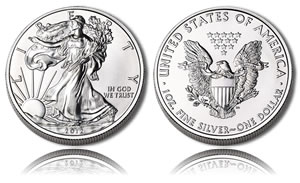
American Silver Eagle and 5 oz bullion coin sales surge in May

American Silver Eagle bullion coins have been in a repeating pattern when it comes to their monthly sales this year. One month will show a decline only to be followed the next month with an increase.

This pattern was followed yet again in May when United States Mint authorized purchasers ordered 2,875,000 of the silver coins, logging an increase of 1,355,000, or 89%, of the number delivered in the previous month.

Despite the large advance, sales were diminutive compared to January when U.S. Mint sent out 6,107,000, the second best monthly total of all-time. But still, May easily ranked above all of the other months this year.

Looking at the month of May in general finds 2012 had the third best one since the Silver Eagle first appeared in 1986. Figures come in behind May 2010 when 3,636,500 were sold and May 2011 — which currently holds the title as the best May ever — when 3,653,500 moved. The next closest May was in 2009 with sales of 1,904,500.

It is not too surprising that the American Silver Eagle bullion coin this year has had it tough against 2010 and 2011. These years currently hold the top two spots for annual sales. 2010 hit 34,662,500 only to be surpassed in 2011 with 39,868,500.

So far, 2012 is lagging. Annual sales are at 14,534,000. In comparison, January through May of 2010 saw 15,167,500 sold while January through May of 2011 reached 18,901,500.

Silver has risen consistently in value, more than tripling in price over the past decade. Demand for silver bullion will continue to increase as the global economy struggles and public faith in government-led financial systems is undermined. Historically the foundation of most major currency systems, silver and silver alloy coins may soon see widespread use as a medium of exchange once again.